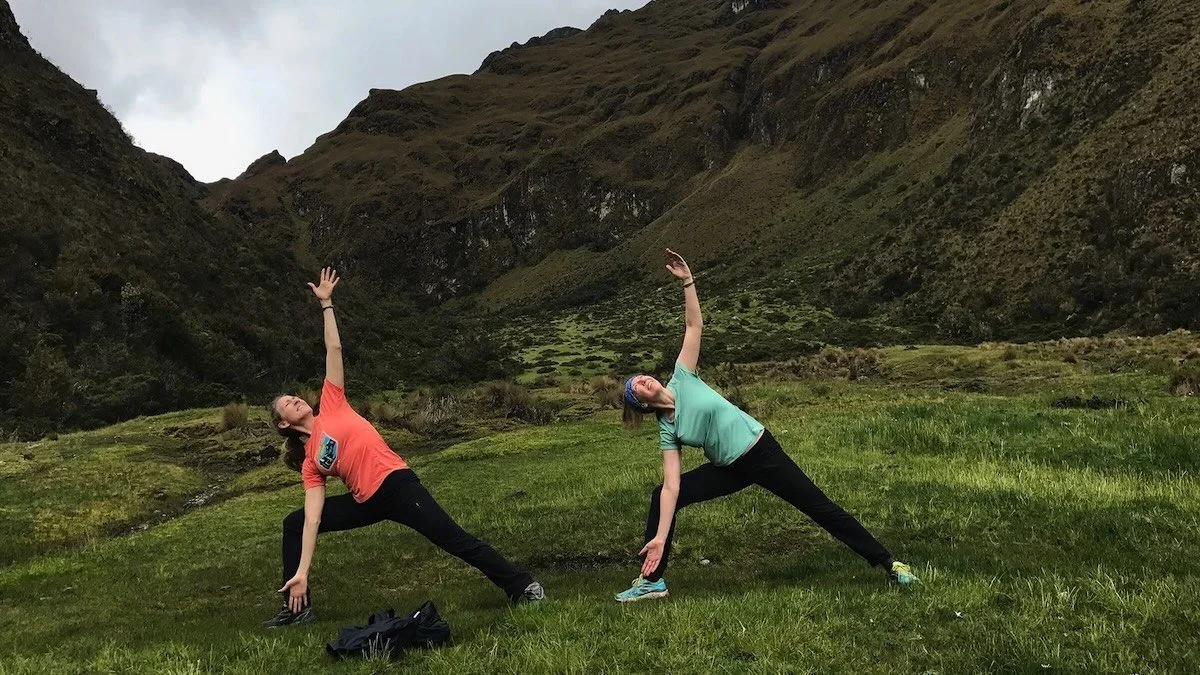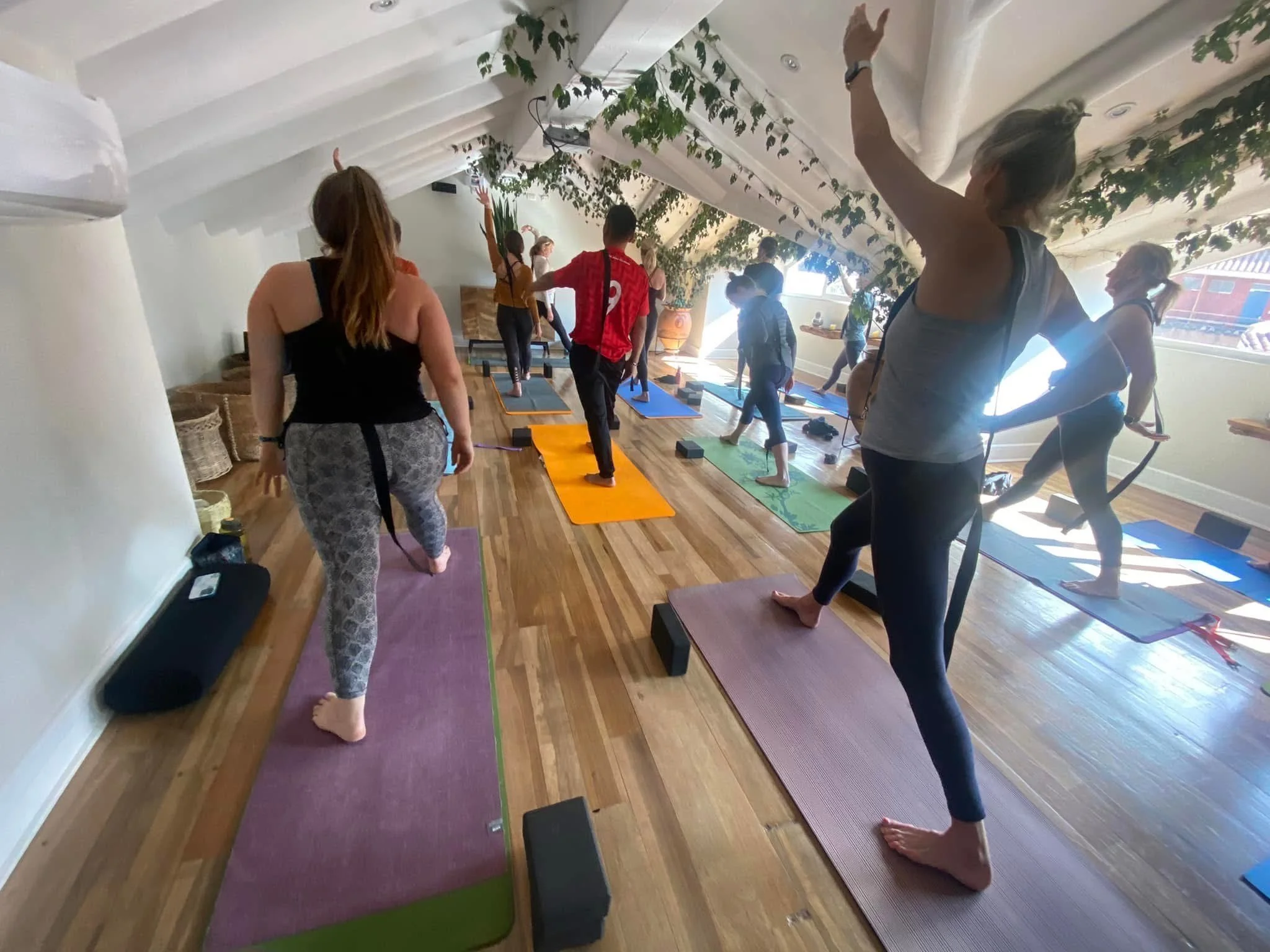
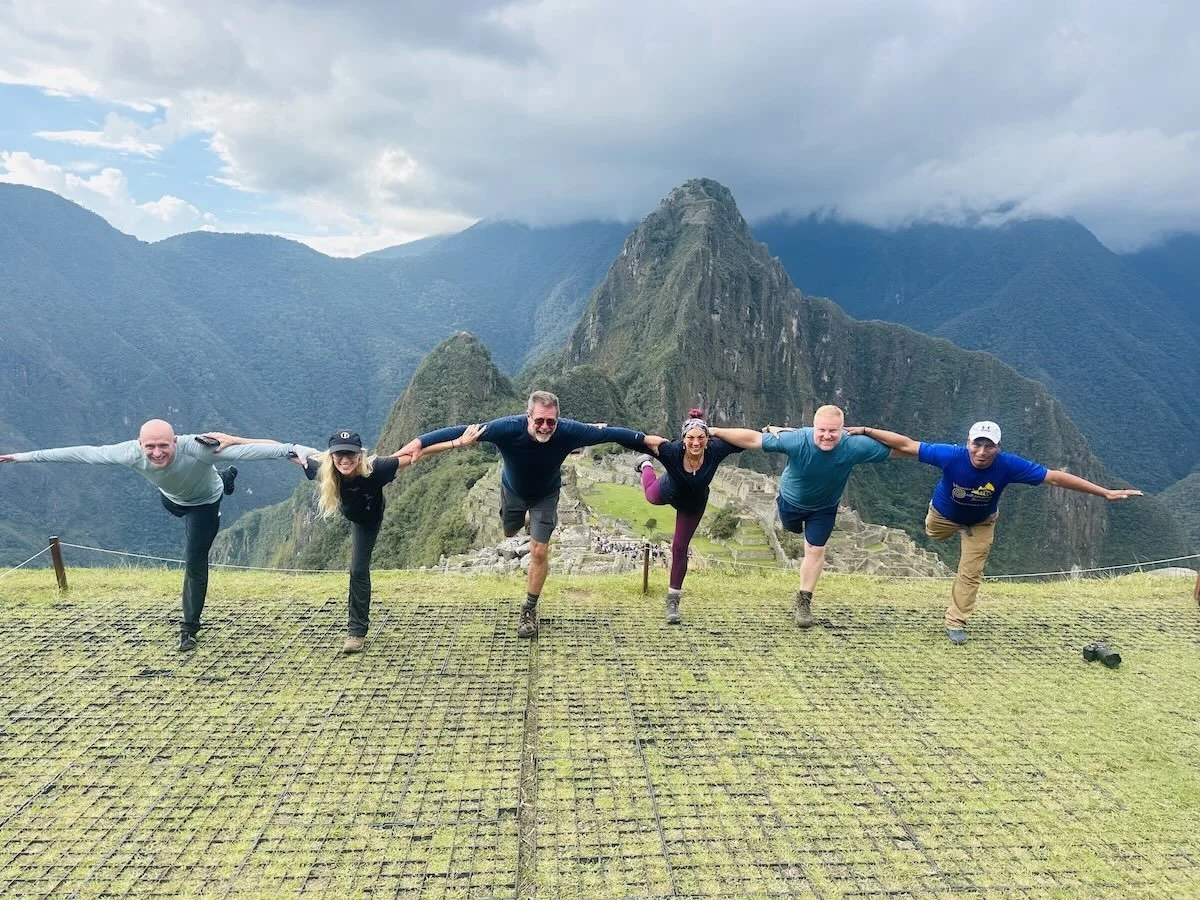
Practising yoga at a retreat in the Sacred Valley, Peru
Cusco & Sacred Valley yoga retreat
Sacred Valley yoga retreat, Peru
Enjoy twice-daily yoga sessions with our Sacred Valley yoga retreat.
This bespoke yoga tour can be tailored to your yoga group’s needs, regardless of party size.
We can adapt the length and route of the yoga itinerary so you can connect spiritually in this fantastic part of Peru.
Cusco and Sacred Valley yoga highlights:
Twice daily yoga sessions
Flexible itinerary on our yoga retreat
Visit a local farm and market
Combine with Sacred Valley tours
Visit Cusco, Machu Picchu and more
Spiritual ceremony among Inca ruins

Cusco & Sacred Valley yoga retreat itinerary
Day 1: Start of Sacred Valley yoga retreat
Arrival at Cusco airport (70-minute flight from Lima). Your guide will meet you at the airport, ready to begin your yoga retreat.
We use our private vehicle to transfer to your yoga retreat based in the Sacred Valley. Leaving Cusco, we will have views of snow-capped mountains as we descend into the Sacred Valley of the Incas, following the Urubamba River through fertile farmlands and bustling towns to reach the serene retreat of Sach’a Munay (or similar location) in the Sacred Valley, where you will stay at the hacienda adjacent to the facility.
On arrival, we drink coca tea, rest, acclimate, relax, and then stretch into our afternoon yoga class. There is some free time, and we reconvene for a welcome dinner, followed by a concert featuring local folk music.
Note: We can make more suggestions for accommodation – please ask – depending on group size, budget, and so on. The Sacred Valley lies at 2,865m/9,400ft, making acclimatization to the high altitude easier than in Cusco (3,400m/11,155ft)
Included: Lodging, dinner with a concert of traditional folkloric music, private airport transfer, & use of the yoga studio.
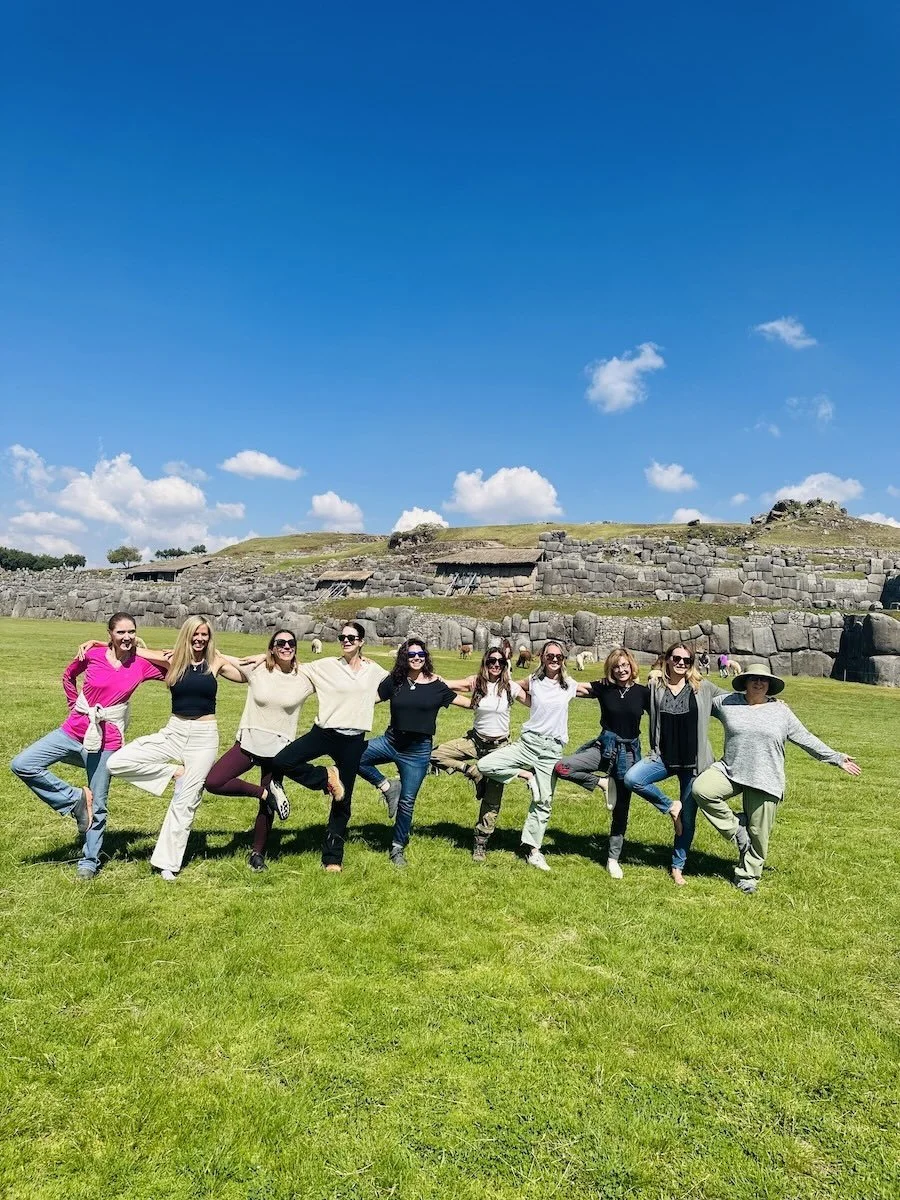
Connecting with nature on our Cusco and Sacred Valley yoga retreat
Day 2: Visit Pisac with Hiking & Spiritual Ceremony
After morning yoga and breakfast, we drive for 90 minutes through the stunning scenery of the Sacred Valley to Pisac. Our first visit is to some terraced Inca ruins perched on a mountain.
Your guide will explain the religious, astronomical, and military functions of these ruins at Pisac. From here, there are fantastic views of the Sacred Valley, and there will be free time for yoga here if desired.
After visiting the Inca ruins, there will be a chance to hike on a little-known, seldom-used original Inca trail and through a tunnel that the Incas built. One of the largest Inca cemeteries is also located in the ruins at Pisac, and we can tour this part of the site, too.
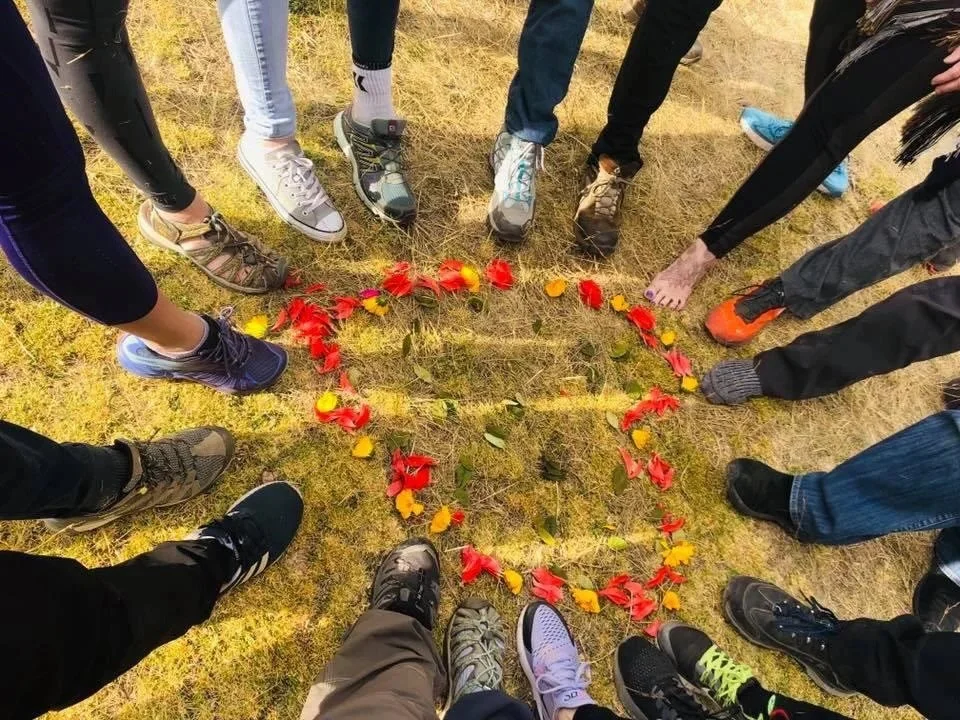
Your guide will then perform a spiritual ceremony while overlooking Pisac, thanking Pachamama for life, food, love, and family, all while feeling the energy of the Inca ruins and Sacred Valley.
We have lunch in Pisac and then visit the handicraft market in town to buy ceramics, jewelry, and woven goods.
We retrace our steps to Sach’a Munay (or a similar location), where there will be time to relax before afternoon or evening yoga, followed by dinner.
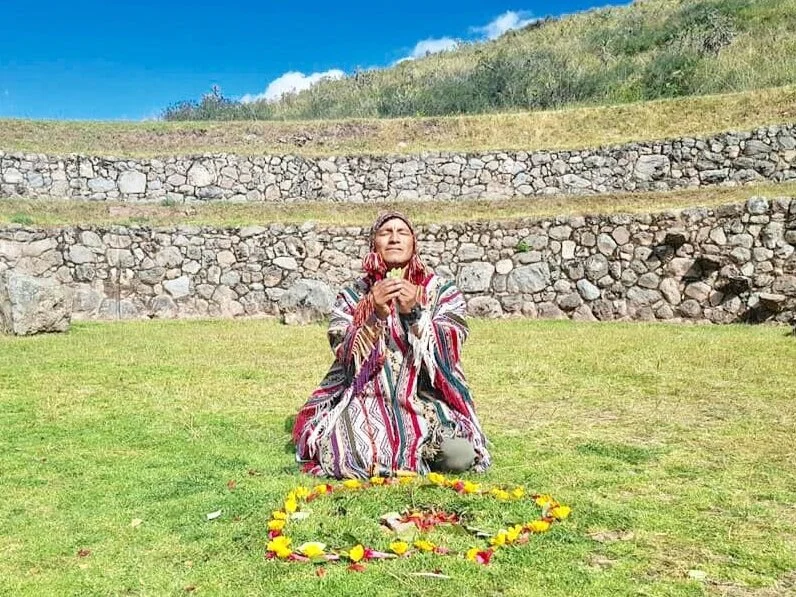
Spiritual connections on our Cusco and Sacred Valley yoga retreats
Day 3: Sacred Valley - local market, farm, ceramics & chicha
After yoga and breakfast at the hacienda, Valentin takes you on a guided tour of a market in his hometown of Urubamba.
This is not a tourist market, but a market where locals buy and sell vegetables, chilies, and some of the 3,000-plus varieties of potatoes grown in Peru. Here, local families sell fruits, vegetables, flowers, and natural medicinal plants. Your guide takes you to the market, where you can taste Peruvian fruits and foods such as passion fruit, lucuma, and chirimoya.
We also learn about chicha, a fermented corn drink produced by the Incas and still drunk by locals today.
What is chicha?
Chicha is a fermented alcoholic drink found throughout the Andes. It is usually made from maize, but there are many regional varieties made from quinoa, yucca, and even potato.
The Incas used chicha in ceremonies and rituals, and it is still drunk on special occasions today. You buy it from Chicherias. These tavern-type places usually offer home-brewed chichi and are often identified by a small red flag outside.
Lunch and pottery
We buy fresh and local produce that will be made into our lunch at Valentin’s family farm in Yanahuara.
While lunch is being prepared, we can visit the workshop and gallery of an excellent local potter, Pablo Seminario.
We then tour Valentin’s farm and fruit orchards, learn about and taste local produce, cut alfalfa to feed the guinea pigs (which are a local delicacy!), and drink chichi. We have lunch with his family in this beautiful setting. There is the option to do yoga on the farm grounds or return to Sach’a Munay or a similar location for an evening class.
Included: Breakfast, lunch, dinner, private transport, snacks, & yoga.
Day 4: Salt mines, Moray, Pachamanca, & Chinchero
After morning yoga and breakfast at the hacienda, we start our day with a tour of Maras.
Maras salt mines
Maras’ site is a collection of salt mines that have been used since pre-Inca times.
Workers channel an underground stream into various salt ponds. There are around 5,000 separate salt ponds, though not all are in use at the same time. The local community has to work hard and cooperatively to maintain the balance between salt and sweet water, to control evaporation, and to keep the pond walls in good order.
The intense Andean sun evaporates the water, leaving the highly prized salt. Some salt is white, some red and some brown, and you can find Maras salt for sale in the area.
Yoga at Moray
We then continue to Moray (3,500m/11,500ft). This is an unusual and spectacular set of ruins: concentric circles thought to have formed an Inca agricultural laboratory. Some of the terraced circular depressions are 30m/98ft deep, creating a wide variety of temperatures within them.
We walk farther into this archaeological site to see some ruins that may have served as one of the Incas' main amphitheaters. Rituals and ceremonies may have been performed here.
We can do yoga on some of the terraces (your guide will let you know where you can practice), looking down onto this fantastic set of ruins.
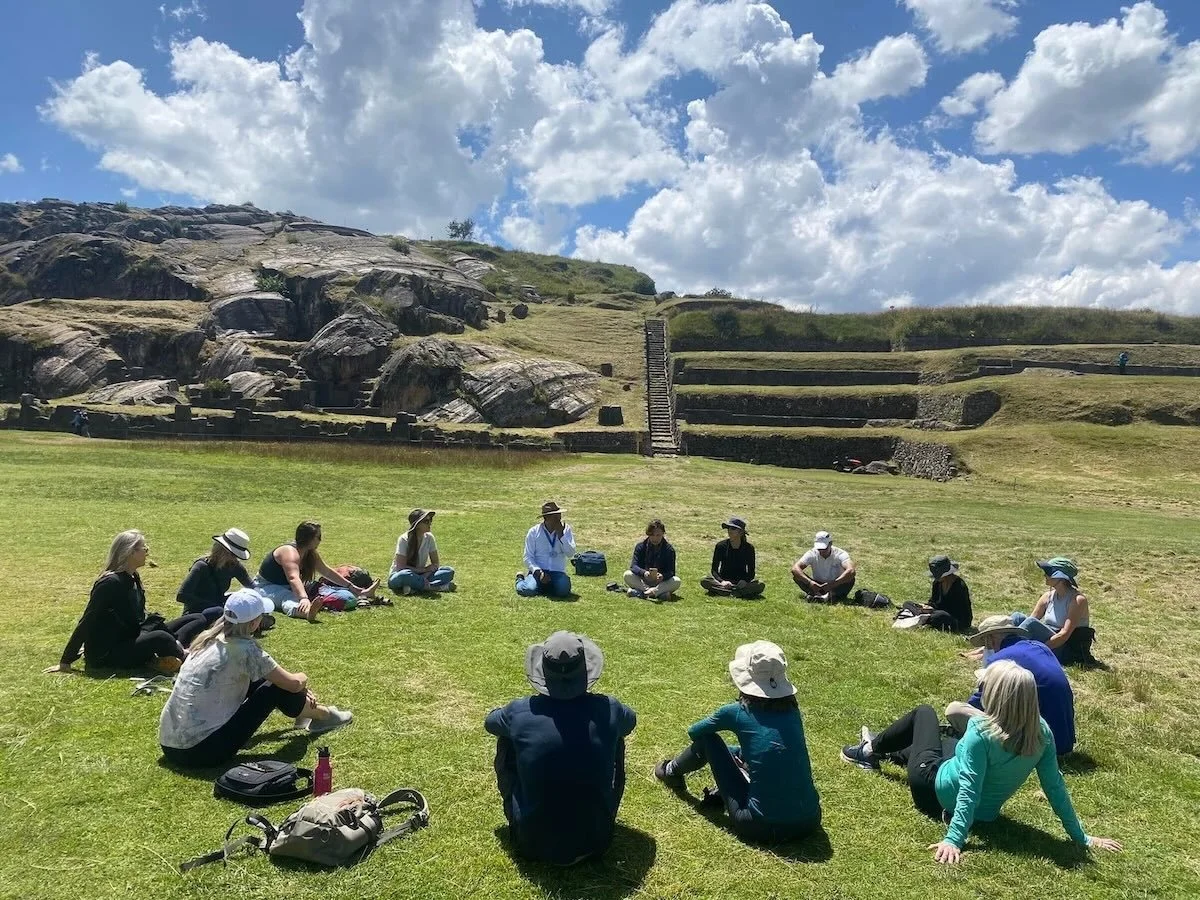
Yoga classes at Moray, Sacred Valley, Peru
Pachamanca lunch
We walk to the home of a local family where a picnic lunch will be prepared—we will have the chance to make a Pachamanca.
Pachamanca comes from the Quechua words “Pacha” or Earth, and “Manka” or pot. There are regional variations in how it is cooked and, occasionally, in the ingredients.
Preparation begins with the heating of stones over a fire. Meat and vegetables are then placed on top. An oven—called a huatia—is made by putting earth and grass on top of the food. Everything is usually cooked for 2-3 hours. We arrive just in time to dine and see the Pachamanca being prepared.
After eating, we head to Chinchero.
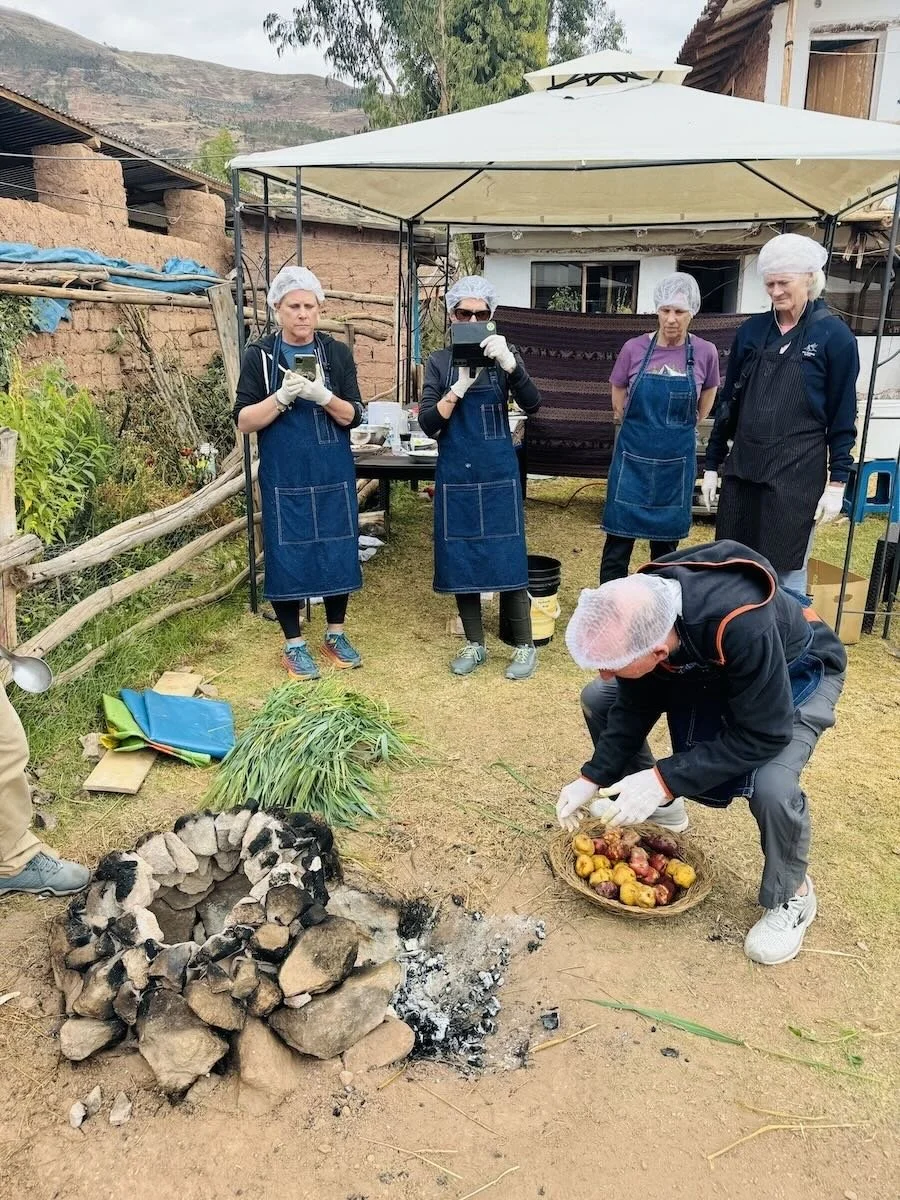
Making Pachamanca in Peru’s Sacred Valley
Centro de Textiles Tradicionales del Cusco
In Chinchero, we visit the women's weaving cooperative to watch a demonstration by local weavers. They use traditional Inca techniques for dyeing fabric and for weaving traditional patterns. The local community has used its internationally-renowned weaving skills to regenerate the village.
There is time to browse in the shop, where the items you’ve seen being made are sold. This is a great place to get souvenirs, including Inca-style purses, colorful tablecloths, wall hangings, and many other exquisitely patterned artisanal goods.
Transfer back to Sach’a Munay in time for relaxation and afternoon or early evening yoga.
Included: Breakfast, lunch, dinner, entrance to Maras, snacks, private transport, & yoga studio.

Local weavers dying alpaca wool at Chinchero, Sacred Valley, Peru
Day 5: Cusco City Tour
Morning yoga and breakfast followed by a private transfer to Cusco (90 minutes).
Our first stop is the bustling San Pedro market, where many Cusqueños start their day. We stop for coffee or tea and take a tour of the stands that sell everything from fruits and vegetables to meats and medicinal plants.
More about San Pedro Market
San Pedro Market is a full sensory experience. On the way in, you will notice street vendors in traditional dress, hawking snacks, herbs, and other dry foods. There is a myriad of stalls inside, selling everything from local food to souvenirs to freshly squeezed juices from a dizzying array of fruits (make sure yours is made with bottled water to avoid an upset stomach).
Colors and smells flood your senses. Your guide will help you with any purchases you wish to make—haggling can be great fun—as well as trying local fruits and foods.
Plaza de Armas and Cusco Cathedral
After enjoying the market, we walk to Cusco’s central plaza, Plaza de Armas. This plaza is a great place to return to later and enjoy a coffee from one of the coffee shop balconies while people-watching.
On our city tour, we head to The Cathedral Basilica of the Assumption of the Virgin (Cusco Cathedral), built between 1560 and 1654 in the Gothic-Renaissance style. The Incas included some of their own symbols—there is the carved head of a jaguar on the main cathedral doors.
We head into the cathedral, and you can see a massive silver altar and a painting of the Last Supper where they are eating guinea pigs.
Coricancha Temple
Our next stop-off is Coricancha Temple, the most sacred Inca temple dedicated to Inti, the Inca Sun God. When the Spaniards arrived in Cusco, they demolished the Coricancha Temple but preserved its foundations, which they used to build the Santo Domingo Convent upon. Your guide will explain the temple's critical role in both Inca mythology and Spanish colonization.
Lunch is usually taken around noon-1pm, depending on how hungry you are feeling. Your guide will take you to a local restaurant where you can try any number of regional dishes, including cuy (guinea pig) if you wish.
Sacsayhuaman
After lunch, we hop into our waiting vehicle and drive 15 minutes to the UNESCO World Heritage Site of Sacsayhuaman.
Sacsayhuaman is located on a steep outcropping overlooking Cusco. This Inca site is composed of massive boulders held together without mortar. It was an essential site for military and ceremonial purposes.
You will be given a private tour of the site, and we will visit a vista with great views of the city of Cusco. We return to Sacred Valley for the afternoon or evening yoga and dinner.
Included: Breakfast, dinner, entrance to Cathedral and Corikancha, hotel, and private transport.
Not included: Lunch, entrance to Sacsayhuaman (covered by boleto turistico).
Day 6: Ollantaytambo & transfer to Aguas Calientes
After yoga and breakfast, you will be picked up and transferred to Ollantaytambo.
Ollantaytambo is one of the best-preserved Inca towns in all of Peru. Many of the original 15th-century buildings are still standing. Ollantaytambo was an important town – it was home to the Inca emperor Pachacutec – and was the base for military victories against the Spanish.
Today, we explore the exquisite terracing, fountains, aqueducts, and ruins that surround the town. A highlight is Temple Hill with its Sun Temple and the impressive Wall of the Six Monoliths. The Pinkuylluna Inca storehouses are also spectacular.
Aguas Calientes
In the afternoon, we take the Vistadome train to Aguas Calientes, the town at the foot of Machu Picchu. We can take in the views during the spectacular two-hour journey to the town of Aguas Calientes. The train ride allows for fantastic views of the countryside, so keep your camera well-charged.
On arrival in Aguas Calientes, we take you to your hotel, and the rest of the evening is free. We wake early the next day for the tour of Machu Picchu.
Aguas Calientes hot springs
The town of Aguas Calientes sits at the foot of Machu Picchu. It is named after the warm, thermal waters that come to the surface. If you have time, it’s well worth paying the entry fee for an hour or two to soak in the warm waters.
There will be time to wander around the town on your own as well.
Included: Breakfast, snacks, train tickets to Aguas Calientes, entrance to hot springs, Tierra Viva Machu Picchu, or similar caliber hotel.
Not included: lunch & dinner.

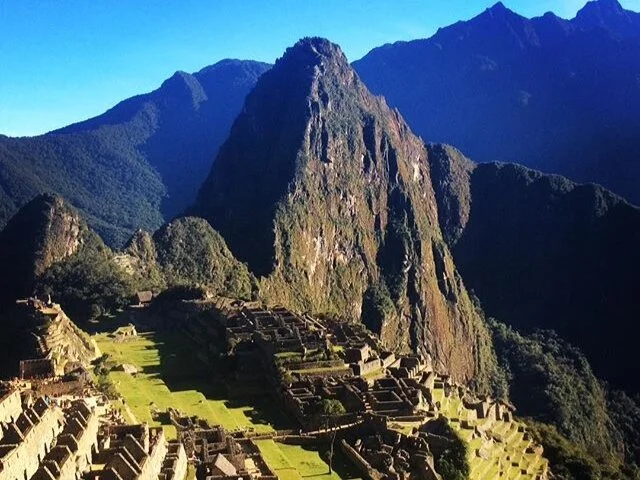
Wispy clouds surround the Machu Picchu ruins, Peru
Day 7: Machu Picchu guided tour
Today is the day when you will get to visit the site that many people dream about seeing. We will have a very early am departure at 4:30 am, when we will catch the 30-minute bus to reach Machu Picchu for sunrise.
The first entry into Machu Picchu is at 6 am. After that, entrance is available on the hour, every hour, until the last entry at 2 pm. Please ask about the time that works best for you.
With your guide, you head to the bus stop. From here, it’s a 20-minute bus ride up a zig-zag path to the entrance to the Machu Picchu ruins. All guided tours last around two hours. There is free time to take pictures and add on a visit to Huayna Picchu or Machu Picchu Mountain (early morning entry required).
Below are some of the highlights you will see.
Intihuatana (Sun Clock)
This mysterious and beautiful sundial was carved directly into the bedrock of Machu Picchu. Much is not known about its unusual design and markings. What is known is that it aligns with the sun during the winter solstice (June 21 in Peru). At midday, the main stone casts no shadow at all.
The Temple of the Sun
The Temple of the Sun was the most sacred temple at Machu Picchu. It was most likely accessible only to priests and high-ranking Incas.
It is built over an enormous rock in a unique semi-circular fashion and features a tower and a trapezoidal window. It is believed that the Incas worshipped their sun god, Inti, and other theories exist as well.
These range from royal tombs to observatories and sacrificial centers.
Temple of the Condor
This is one of the most spectacular sites at Machu Picchu. The Incas took a large, natural rock formation and sculpted it to resemble a condor in flight, wings spread and magnificent.
There are details alongside its majesty; a condor’s head and neck feathers complete the condor. A mummy was found in a small cave under the rock, and there is speculation that sacrifices happened here, too. Behind the temple is a prison complex and dungeons.
Temple of the Three Windows
We will see this temple in the Sacred Plaza area of Machu Picchu. It is a large structure, with three walls, and the main attraction is the three large windows.
There are many theories as to why there are three windows. Your guide will discuss their and your opinions during the tour.
Huayna Picchu and Machu Picchu Mountain
Huayna Picchu
You need to buy a permit (limited in number) to climb Huayna Picchu, and it sells out well in advance. Please ask us for more information.
It is well worth the entry fee. It’s an energetic 1-2-hour walk to the top, with steep staircases and steel cables at points. In wet weather, it can be slippery.
Once you reach the top, you have a new and wonderful perspective of Machu Picchu. Huayna Picchu also offers access to the Temple of the Moon, one of the three main temples at Machu Picchu.
The peak of Huayna Picchu sits at 2,693m/8,835ft, about 260m/850ft higher than Machu Picchu.
Huayna Picchu is not recommended for people with vertigo or a fear of heights. There are some steep stairs and vertiginous areas.
Machu Picchu Mountain
Like Huayna Picchu, you need a pre-bought permit for Machu Picchu Mountain. It doesn’t sell out as fast, but it is still recommended to buy the ticket as soon as possible.
The Machu Picchu Mountain trek is considered moderate to challenging. You follow an original Inca Trail up to its peak at 3,082m/10,111ft, which offers breathtaking views of the ruins and the valleys and is 652m/2,139ft above Machu Picchu.
We recommend around 90 minutes to climb up and an hour to descend. During the wet season, the trail can become more slippery. Again, this is not suitable for people with a fear of heights—in places, the trail is very steep and often follows the mountain edge.
You will then have two hours of free time to explore on your own before taking the bus back to the town of Aguas Calientes, where we will have lunch. We will then take a mid-afternoon Vistadome train back to Ollantaytambo or Poroy, and then drive back to Cusco, where we spend the night.
Lodging: Tierra Viva Cusco Plaza or similar caliber hotel
Included: Breakfast, snacks, bus to and from Machu Picchu, train back to Ollantaytambo, & private transfer back to Cusco.
Not Included: Lunch & dinner.
Day 8: Cusco, transfer out
Enjoy a free day in Cusco.
Morning yoga at a studio in Cusco Healing House, Inbound Yoga Cusco, or Yoga Room Cusco. Here you have the opportunity to visit a myriad of museums and markets, or to wander the cobblestone streets and charming shops of the San Blas artistic district. You can then have an afternoon yoga class at a yoga studio in Cusco, and we all meet up for a final farewell lunch before transferring to the airport.
Lodging: Tierra Viva Cusco Plaza or similar caliber hotel
Included: Breakfast and late lunch, yoga studio, and transfer to the airport.
Don’t forget to read our FAQs, covering altitude, money, and more.
Cusco & Sacred Valley yoga retreat prices
Minimum two people
8 days
Contact us for pricing.
It will depend on the size of your group and the kind of accommodations you desire.