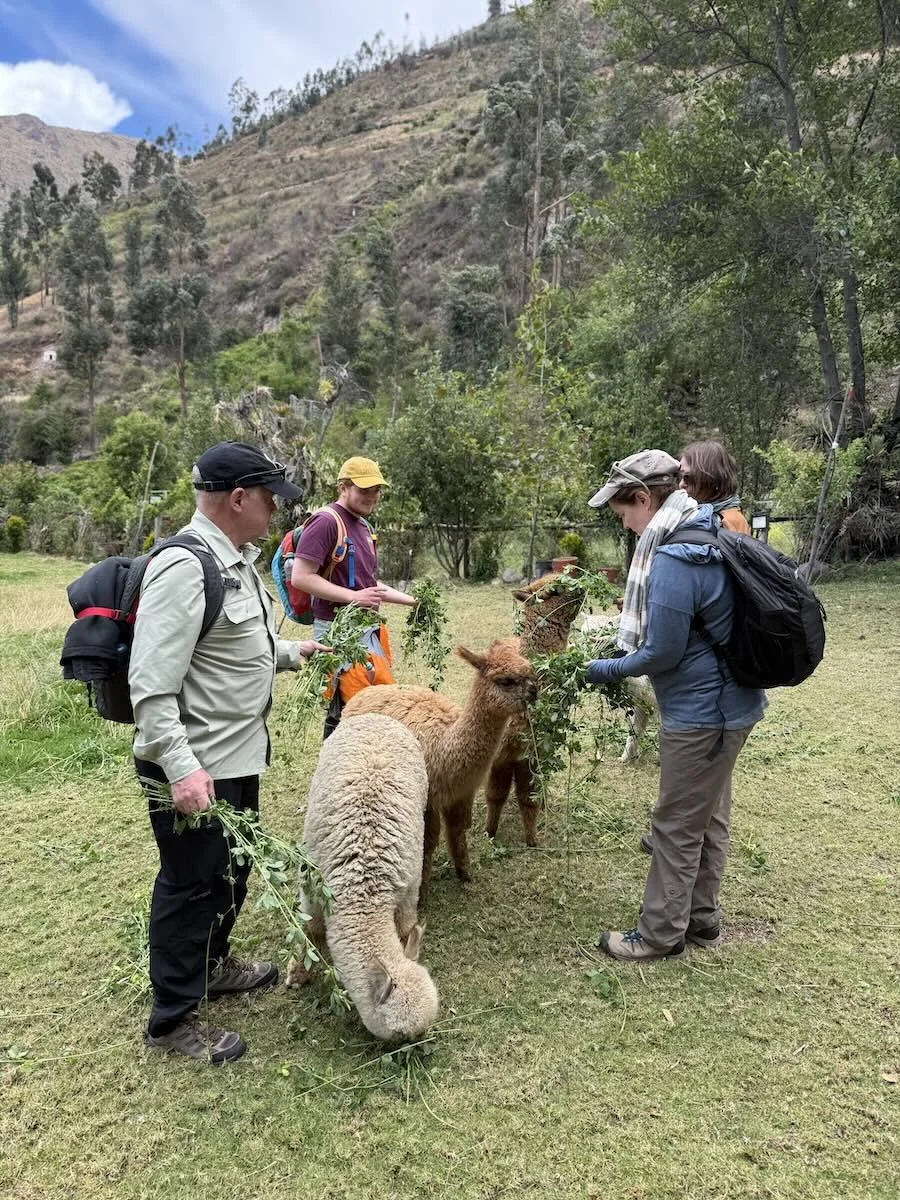
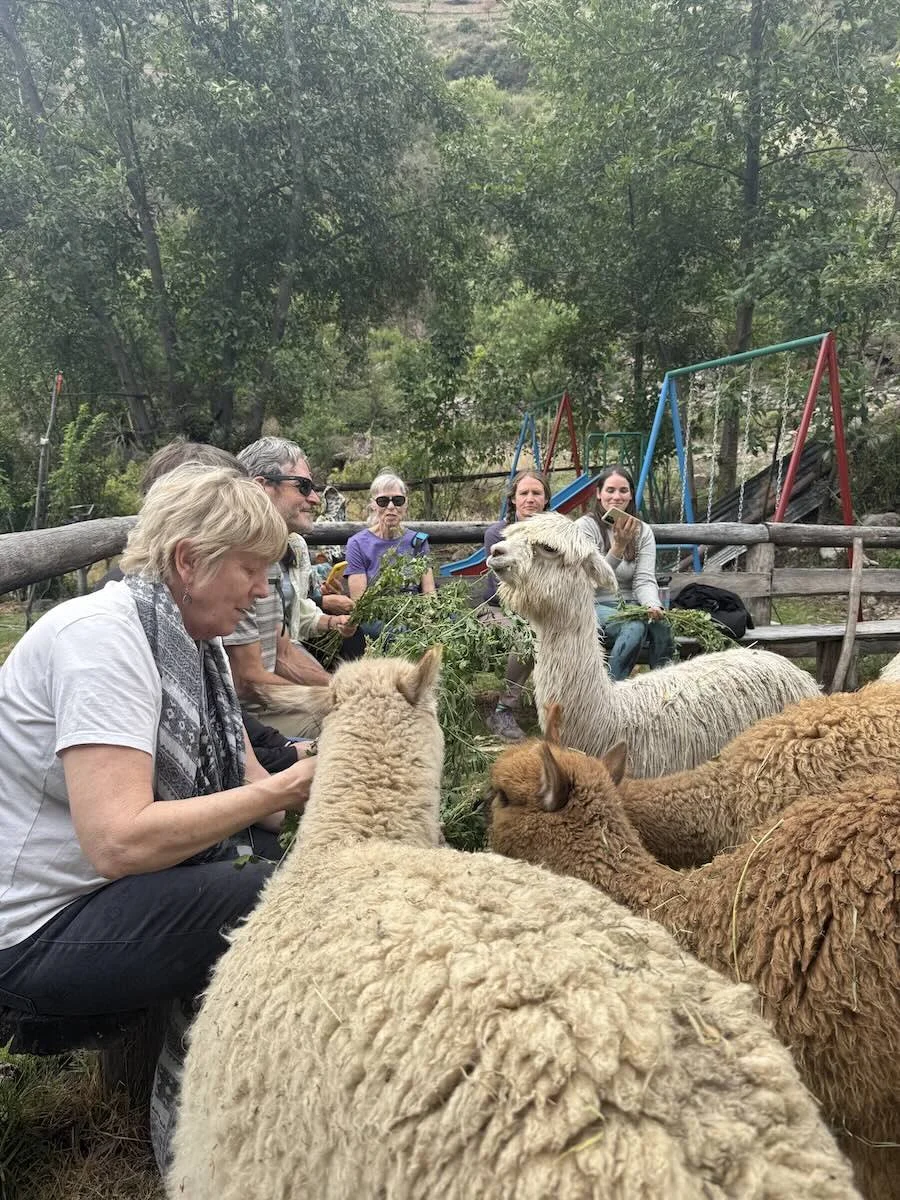
Feeding alpacas on our Sacred Valley farm visit
Ollantaytambo, Pisac & farm visit
Day trip to Ollantaytambo, Pisac & a farm
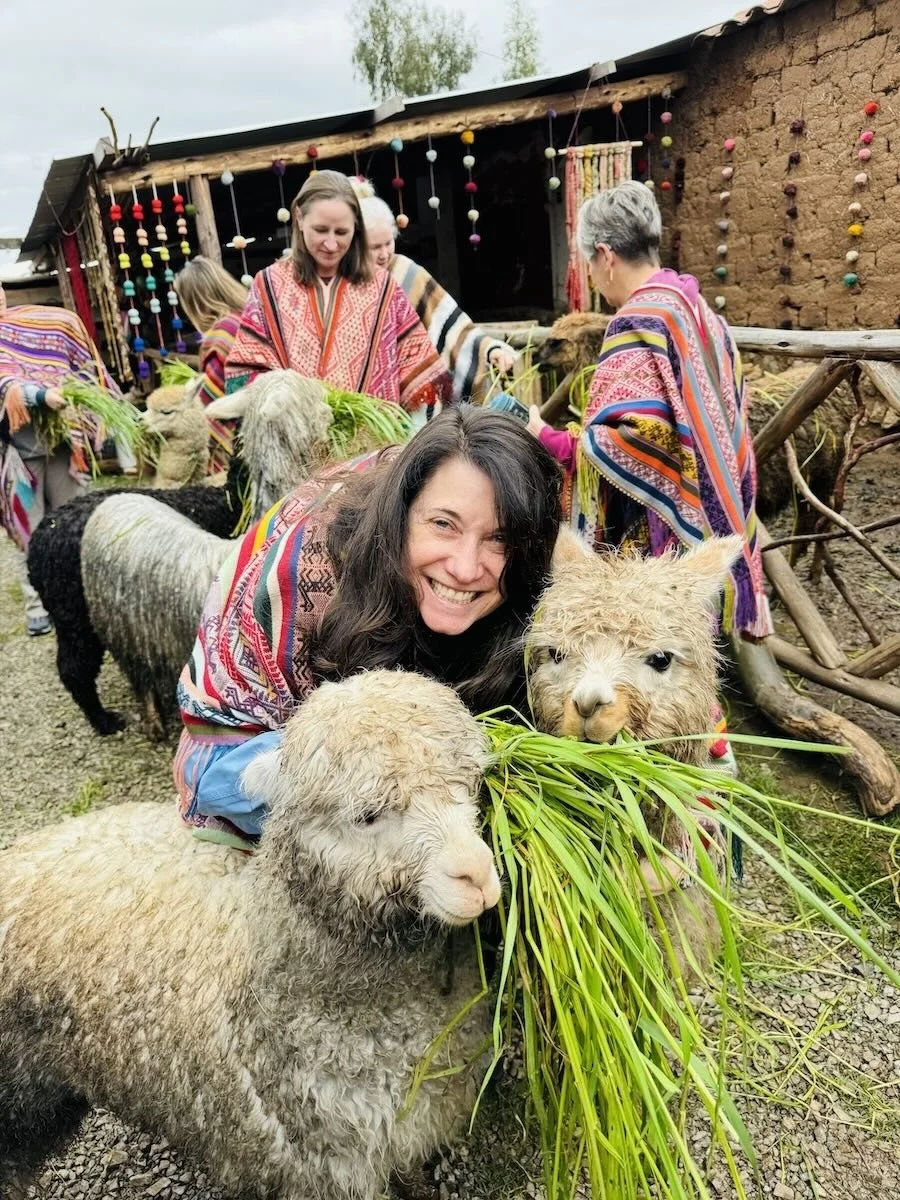
Help out at an organic farm in Peru’s Sacred Valley
Visit the real Sacred Valley; help out on a farm, see how chicha, a maize beer, is made, and visit the top sights of Ollantaytambo and Pisac.
We show you how locals live and work in the fertile land of the Sacred Valley. There is also the chance to see some of the area’s excellent produce.
Ollantaytambo and Pisac highlights include:
Help start a batch of chicha
Try the famous Inca maize beer
Ollantaytambo
Sacred Valley farm visit
Visit Pisac ruins and market
Urubamba market
Inca ruins, markets, a farm tour & make chicha
We pick you up from your hotel (Cusco at 7 am, Ollantaytambo at 8.30 am). There is a 90-minute drive through beautiful mountains and then down to the Sacred Valley.
Our first stop is Ollantaytambo, one of the best-preserved Inca towns in all of Peru. Many of the original 15th-century buildings are still standing. Ollantaytambo was an important town – it was home to the Inca emperor Pachacutec – and was the base for military victories against the Spanish.
Today, we explore the exquisite terracing, fountains, aqueducts, and ruins that surround the town. A highlight is Temple Hill with its Sun Temple and the impressive Wall of the Six Monoliths. The Pinkuylluna Inca storehouses are also spectacular.
Visit a farm in the Sacred Valley
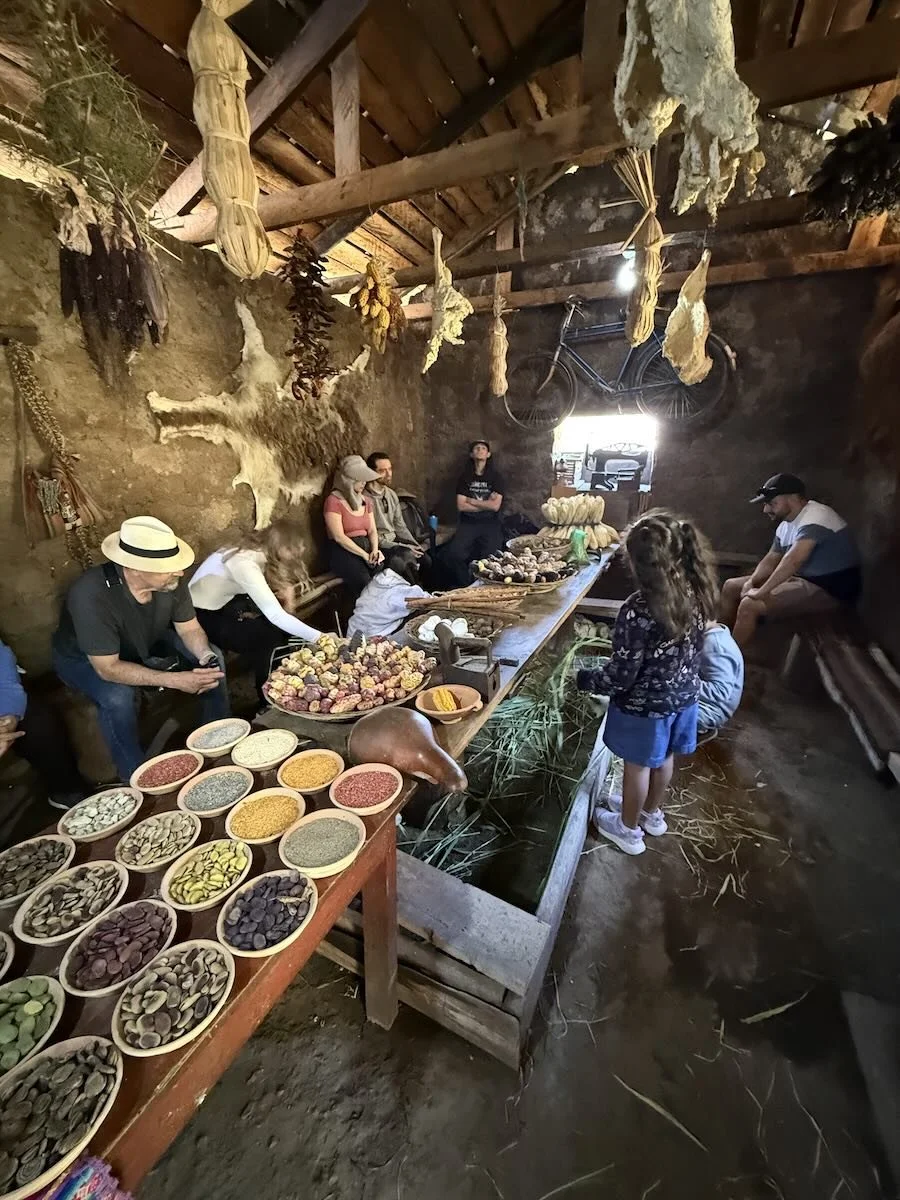
We hop into the car and drive 20 minutes to the nearby town of Yanahuara, where we visit a local farm. This gives you the chance to see how local farmers cultivate the land.
You can help cut the alfalfa used to feed guinea pigs. Guinea pigs are a common sight in Peruvian kitchens and gardens. They are often cooked for special occasions throughout the Andes.
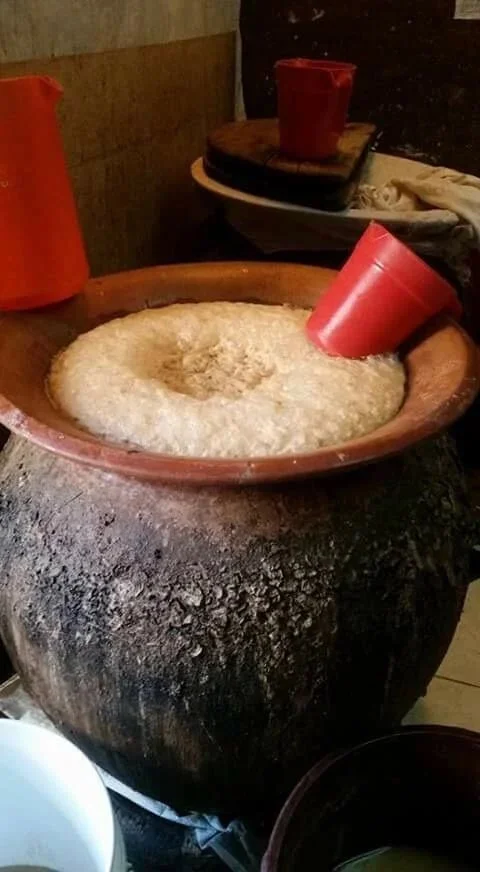
And now for chicha! The Inca maize beer. Your guide will explain the importance of this beer to the Inca Empire and explain the process of making it. You can help to start a batch of this brew, too.
What is chicha?
Chicha is a fermented alcoholic drink found throughout the Andes. It is usually made from maize, but there are many regional varieties made from quinoa, yucca, and even potato.
The Incas used chicha in ceremonies and rituals, and it is still drunk on special occasions today. You buy it from Chicherias. These tavern-type places usually offer home-brewed chicha and are often identified by a small red flag outside.
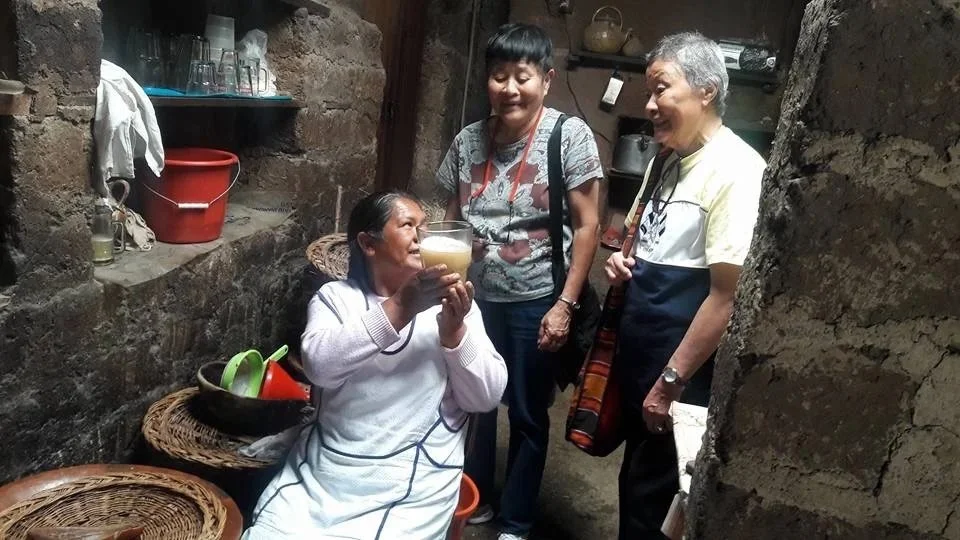
Making chicha, Inca maize beer, in Peru’s Sacred Valley
How to make chicha
Chicha is made in pretty much the same way as malted beer. The maize is germinated and the malt sugar extracted. This ‘wort’ is then boiled and fermented for a few days, often in enormous clay vats, stirred occasionally.
Every chicheria has a different process. Some add sugar to aid fermentation; others get people to chew the corn and spit it into the water. Some makers chew the maize, form small balls, then dry them and use them to ferment chicha.
When ready to serve, the chicha is sieved to remove any corn from the liquid.
Most chichas are yellow, and the alcoholic content, while not usually strong, can undoubtedly be felt.
For non-drinkers, there is the purple chicha morada, non-fermented, and made from purple maize. It’s common to be served with meals in local restaurants.
This will be followed by a private gourmet picnic lunch prepared by our chef. It will feature local organic produce, including some of the farm’s crops. Enjoy a leisurely lunch outside, taking in splendid views over the Sacred Valley.
Urubamba market
After lunch, we go to the local market in Urubamba. Here, local families sell fruits, vegetables, flowers, and natural medicinal plants. Your guide takes you to the market, where you can taste Peruvian fruits and foods such as passion fruit, lucuma, and chirimoya.
Pisac market and ruins
Next up is Pisac – and it’s not just the market to see – there are majestic ruins at Pisac. We see terraced Inca ruins perched high on a mountain. From here, we climb to the top of the ruins and take in amazing views of the Sacred Valley. Your guide can explain the religious, astronomical, and military functions of these ruins at Pisac.
After visiting the Inca ruins, there will be a chance to hike on a little-known, seldom-used original Inca trail and through a tunnel that the Incas built. One of the largest Inca cemeteries is also located in the ruins at Pisac, and we can tour this part of the site, too.
We finish the tour with a trip to the Pisac handicraft market. Browse ceramics, jewelry, and weaving—great souvenirs. The tour ends with us dropping you off at your hotel in Cusco or the Sacred Valley.
Don’t forget to read our FAQs, covering altitude, money, and more.
Ollantaytambo, Pisac & farm visit
Minimum two people
Groups of 2: $185 per person
Groups of 3-4: $175 per person
Groups of 5-6: $155 per person
Groups up to 7: Contact us for pricing
What’s included?
Private transport, lunch, & chicha
What’s not included?
Gratuities & boleto touristico required for entrance into Ollantaytambo.
Suggested Sacred Valley tours

Quinoa Cooking Class

Urban Cusco

Markets &
Machu Picchu

2-day Inca Trail
Ollantaytambo, Pisac & farm visit gallery

<- BACK