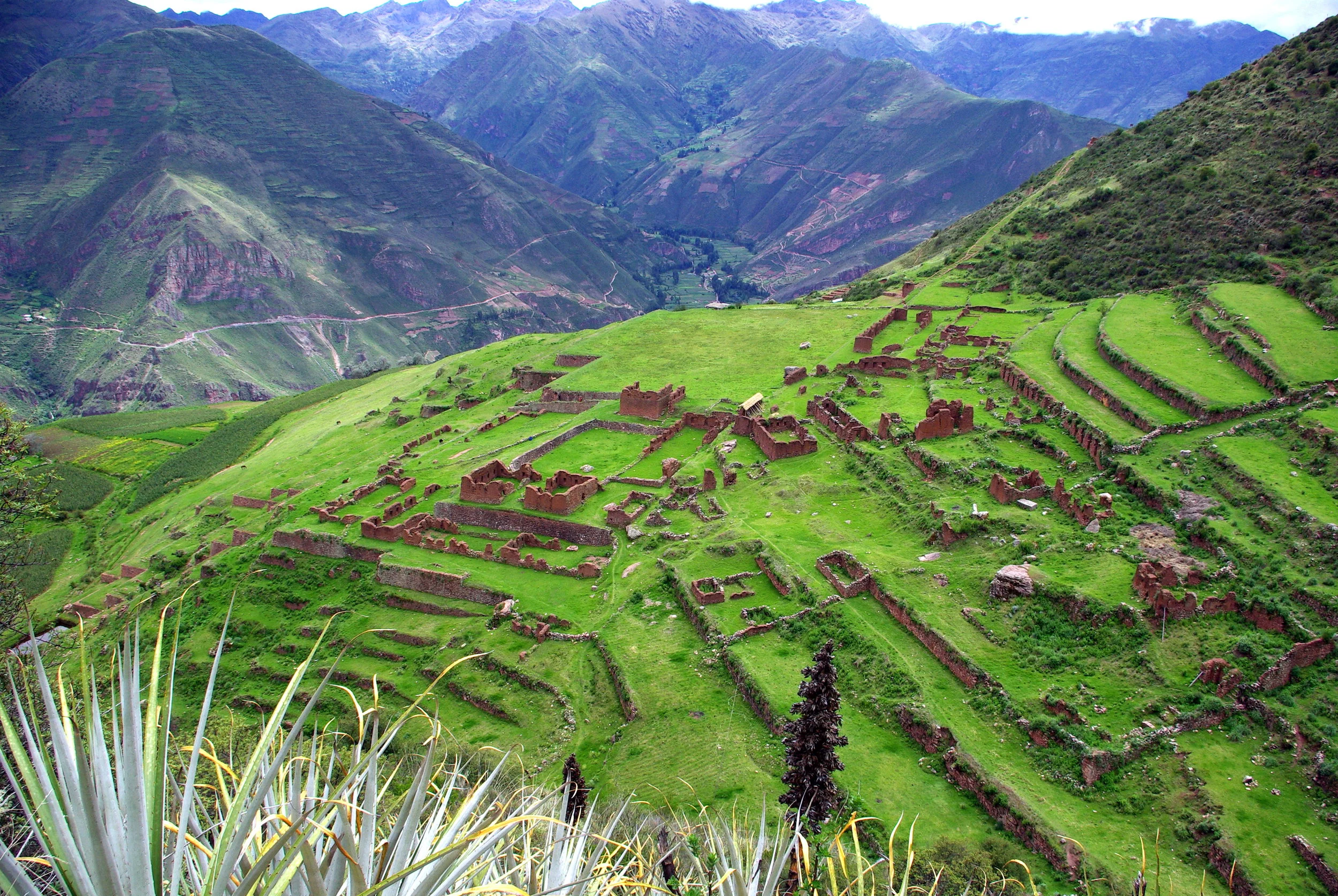
Huchuy Qosqo ruins seem from above
Huchuy Qosqo Trek
Huchuy Qosqo, Homestay, and Machu Picchu

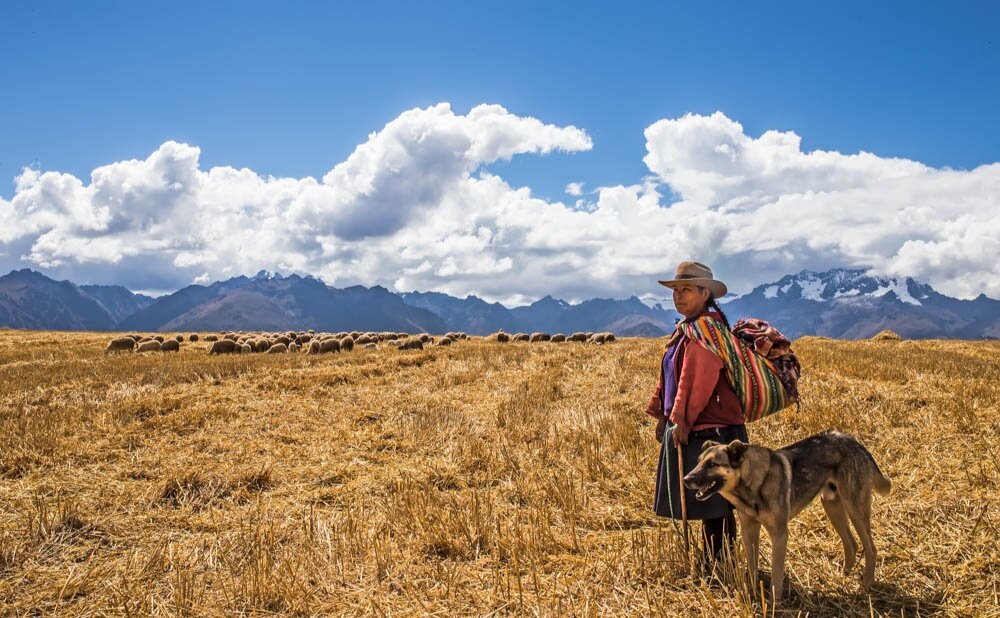
Las minas de sal en Maras se han utilizado desde tiempos incas
Hike the Huchuy Qosqo trek to Machu Picchu and let our expert guides show you these sets of incredible Inca ruins.
Our hiking trip to Huchuy Qosqo takes you to one of Peru’s less-visited but inspiring archaeological sites.
Huchuy Qosqo highlights include:
Walk original Inca trails
Beautiful canyons and mountains
Inca homestay
Delicious, home-prepared, traditional food
Huchuy Qosqo tour
Complete Machu Picchu experience
Huchuy Qosqo means 'Little Cusco' in Quechua. The Incas used Huchuy Qosqo for rituals and offerings to their Gods. It was also an important site in the development of Inca astronomy; there are incredible views of the Milky Way from here.
We take a day to hike to the ruins and then tour them. We spend the night in a house in the local community where people still live in the traditional Inca way. The accommodations are rustic but comfortable, and we share dinner with the local family. If we are lucky, the family can play traditional music for us.
Huchuy Qosqo trek itinerary
Day 1: Cusco to Tambo Machay to Huchuy Qosqo
We pick you up from your hotel at 5:30 am and drive 30 minutes to Tambomachay, the starting point of our trek. Daypacks on, we ascend a beautiful path flanked by tall mountain peaks.
In the distance, we can see Ausangate and the snow-capped mountains of Veronica, Pitusiray, Chicon, and San Juan. Close by, we see grazing llamas and alpacas.
During the hike, we will hike over four mountain passes. Lunch is taken afore four hours of hiking. In the afternoon, we descend towards the Andean village of Pukamarca. We join an ancient path and walk into the Leon Punku ravine. This is not a gigantic ravine, yet it is a beautiful one, steeped in history and with enormous rock walls to admire. The Inca stairs here match any, anywhere in Peru.
The afternoon’s hiking lasts 3-4 hours, and the day’s total distance is 16 km or 10 miles.
We arrive at the house of a local family in Huchuy Qosqo, where we share dinner and spend some time before going to bed for the night. You will be able to experience the lives of local farmers living in remote areas high above the Sacred Valley, the lifestyles their ancestors lived during Inca times.
Day 2: Huchuy Qosqo to Lamay to Machu Picchu
After breakfast with the family, we have an in-depth tour of the archaeological site of Huchuy Qosco.
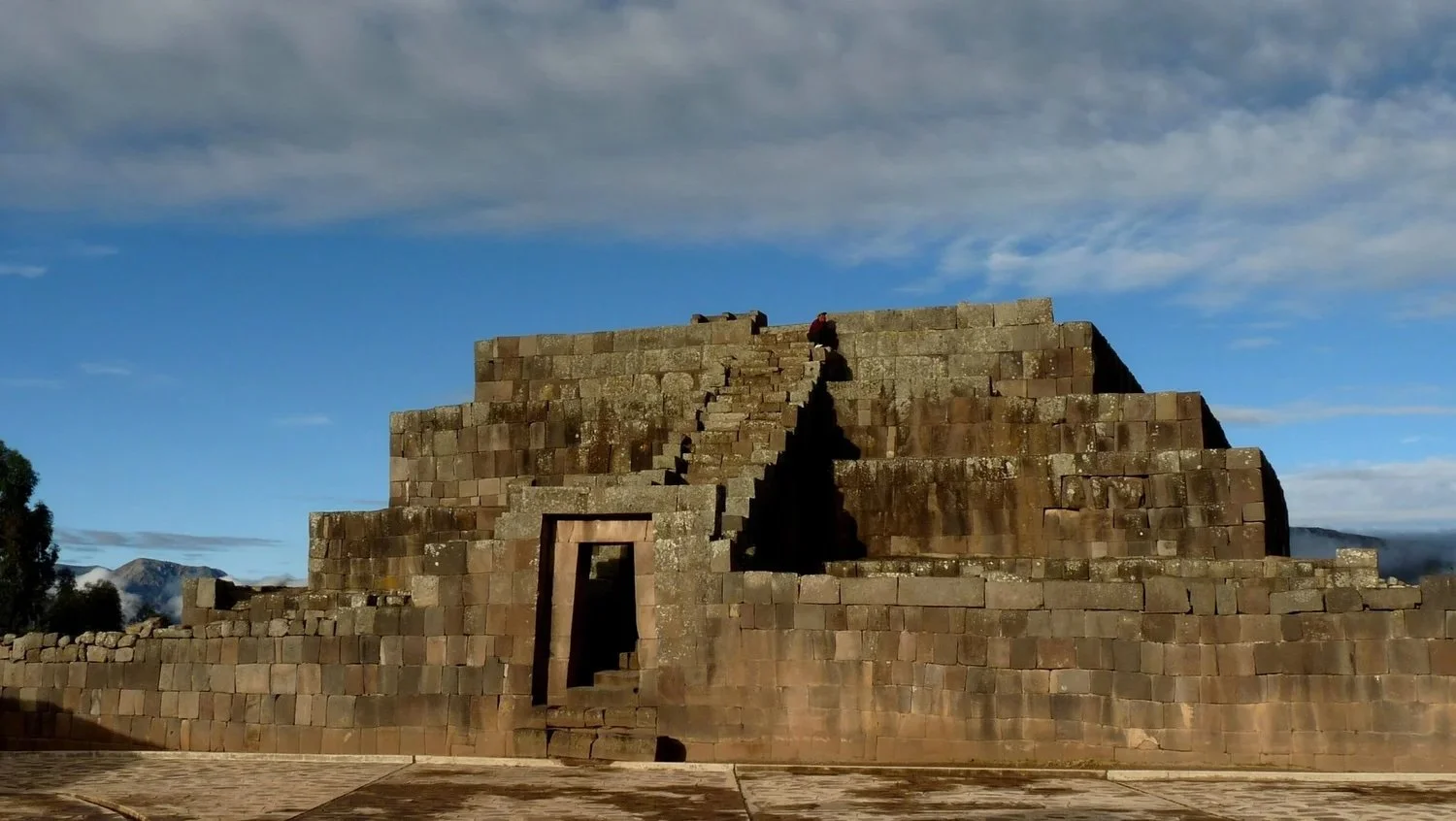
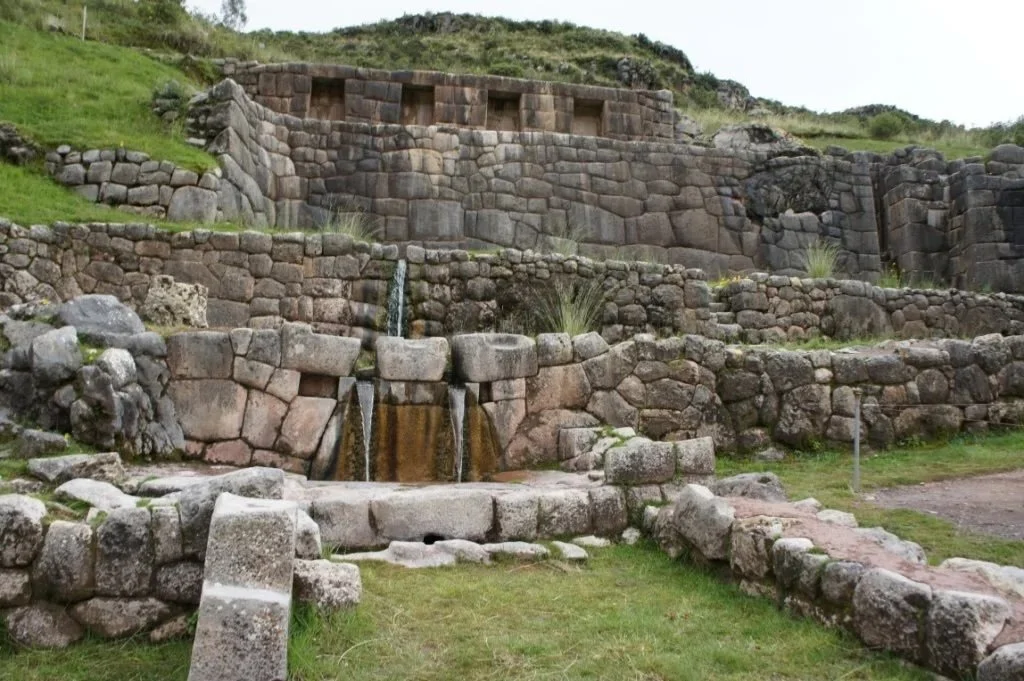
We visit the Inca king’s palace, the Temple of Water, and ceremonial altars, taking in the best of these incredible ruins.
More about Huchuy Qosqo
Huchuy Qosqo lies above the Sacred Valley at 3,650m/11,980ft. The area was first settled between 1000 and 1400 AD.
Emperor Viracocha established it as a royal estate around 1420AD. The Inca Empire did not tax its citizens. Leaders preferred to control land and labor. Royal estates were formed and acquired to strengthen this grip on the people and the land, as well as to serve as sites for elegant country palaces and fortresses.
Huchuy Qosqo is very well preserved and offers some fascinating insights into Inca culture. There are a large number of buildings to see, some made of some and some of adobe. The striking Kallanka (great hall) is one, as is the Inca-built irrigation channel.
The Spanish knew of Huchuy Qosqo and made some changes, including the construction of the larger reservoir, which can still be seen.
Storehouses, called Qolqos, are positioned below the leading site. Qolqos were used to store a wide range of products, from dried meat to quinoa and potatoes. The Incas also invented a cooling storage system, which can be seen here.
Huchuy Qosqo can only be reached by hiking, adding to its appeal. The highest point is 4,200m/13,780ft. The uphill sections are relatively gentle, making this a perfect walk for acclimatization to high altitudes.
Urubamba market and Ollantaytambo
We then descend to Lamay in the Sacred Valley. As you walk down, you’ll be glad to be descending this way and not ascending! It takes 2-3 hours to reach the Sacred Valley floor. The total distance for hiking today is 8 km (4 miles), mostly downhill.
Our transport will be waiting and take us to the Urubamba market.
Here, local families sell fruits, vegetables, flowers, and natural medicinal plants. Your guide takes you to the market, where you can taste Peruvian fruits and foods such as passion fruit, lucuma, and chirimoya.
Then we continue driving to Ollantaytambo, a town with original Inca walls and cobblestone streets.
Ollantaytambo is one of the best-preserved Inca towns in all of Peru. Many of the original 15th-century buildings are still standing. Ollantaytambo was an important town – it was home to the Inca emperor Pachacutec – and was the base for military victories against the Spanish.
We have time to walk and visit the house of a local family located in a former Inca mansion.
We offer 2- and 3-day Huchuy Qosqo tours. Here are the options:
Option 1 (2 days): End the tour with a night in the Sacred Valley, or return by train to Cusco.
Option 2 (3 days): We catch a train to Aguas Calientes and spend the night in a 3-star hotel (Tierra Viva or equivalent).
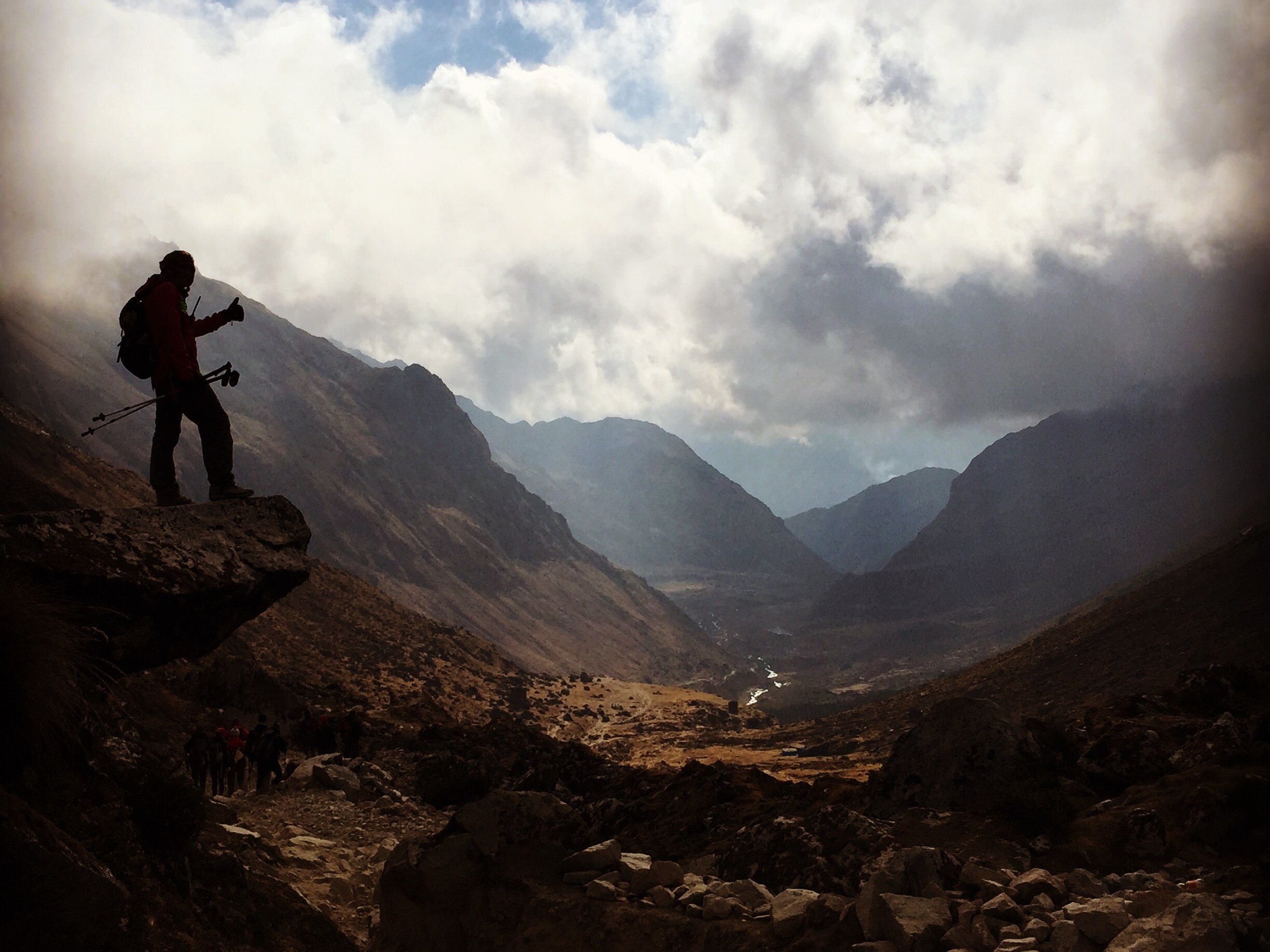
Hiking to Huchuy Qosqo, above the Sacred Valley, Peru
Day 3: Machu Picchu and return to the Sacred Valley or Cusco
The first entry into Machu Picchu is at 6 am. After that, entrance is available on the hour, every hour, until the last entry at 2 pm. Please ask about the time that works best for you.
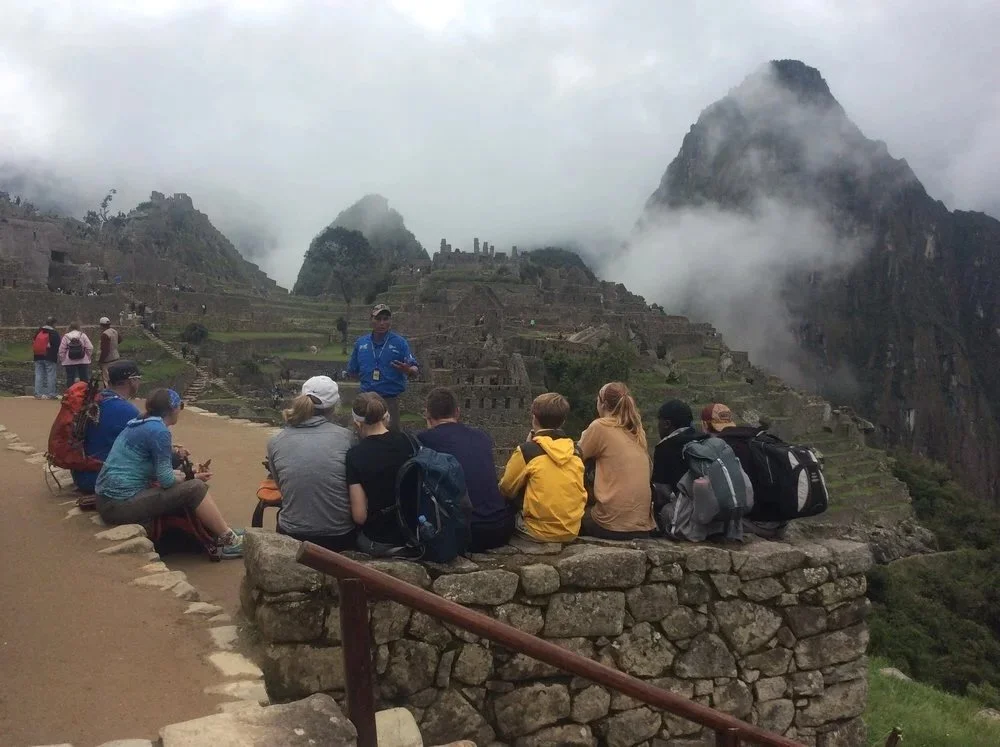
With your guide, you head to the bus stop. From here, it’s a 20-minute bus ride up a zig-zag path to the entrance to the Machu Picchu ruins. All guided tours last around two hours. There is free time to take pictures and add on a visit to Huayna Picchu or Machu Picchu Mountain (early morning entry required).
Below are some of the highlights you will see.
Intihuatana (Sun Clock)
This mysterious and beautiful sundial was carved directly into the bedrock of Machu Picchu. Much is not known about its unusual design and markings. What is known is that it aligns with the sun during the winter solstice (June 21 in Peru). At midday, the main stone casts no shadow at all.
The Temple of the Sun
The Temple of the Sun was the most sacred temple at Machu Picchu. It was most likely accessible only to priests and high-ranking Incas.
It is built over an enormous rock in a unique semi-circular fashion and features a tower and a trapezoidal window. It is believed that the Incas worshipped their sun god, Inti, and other theories exist as well.
These range from royal tombs to observatories and sacrificial centers.
Temple of the Condor
This is one of the most spectacular sites at Machu Picchu. The Incas took a large, natural rock formation and sculpted it to resemble a condor in flight, wings spread and magnificent.
There are details alongside its majesty; a condor’s head and neck feathers complete the condor. A mummy was found in a small cave under the rock, and there is speculation that sacrifices happened here, too. Behind the temple is a prison complex and dungeons.
Temple of the Three Windows
We will see this temple in the Sacred Plaza area of Machu Picchu. It is a large structure, with three walls, and the main attraction is the three large windows.
There are many theories as to why there are three windows. Your guide will discuss their and your opinions during the tour.
Huayna Picchu and Machu Picchu Mountain
Huayna Picchu
You need to buy a permit (limited in number) to climb Huayna Picchu, and it sells out well in advance. Please ask us for more information.
It is well worth the entry fee. It’s an energetic 1-2-hour walk to the top, with steep staircases and steel cables at points. In wet weather, it can be slippery.
Once you reach the top, you have a new and wonderful perspective of Machu Picchu. Huayna Picchu also offers access to the Temple of the Moon, one of the three main temples at Machu Picchu.
The peak of Huayna Picchu sits at 2,693m/8,835ft, about 260m/850ft higher than Machu Picchu.
Huayna Picchu is not recommended for people with vertigo or a fear of heights. There are some steep stairs and vertiginous areas.
Machu Picchu Mountain
Like Huayna Picchu, you need a pre-bought permit for Machu Picchu Mountain. It doesn’t sell out as fast, but it is still recommended to buy the ticket as soon as possible.
The Machu Picchu Mountain trek is considered moderate to challenging. You follow an original Inca Trail up to its peak at 3,082m/10,111ft, which offers breathtaking views of the ruins and the valleys and is 652m/2,139ft above Machu Picchu.
We recommend around 90 minutes to climb up and an hour to descend. During the wet season, the trail can become more slippery. Again, this is not suitable for people with a fear of heights—in places, the trail is very steep and often follows the mountain edge.
Aguas Calientes hot springs
The town of Aguas Calientes sits at the foot of Machu Picchu. It is named after the warm, thermal waters that come to the surface. If you have time, it’s well worth paying the entry fee for an hour or two to soak in the warm waters.
Extend or end your tour
Having visited the ruins, we retrace our steps to Aguas Calientes for lunch. From here, you have many choices.
End the tour in Sacred Valley or Cusco (2 days)
Extend the Sacred Valley Tour (to 3 or 4 days, see below)
Add more of our exciting tours
Don’t forget to read our FAQs, covering altitude, money, and more.
Huchuy Qosqo trek prices
Minimum 2 people
2 days: $280 per person
Contact us for more pricing
What’s included?
2 days: Private transport, English/Quechua/Spanish speaking professional guide, first aid kit including emergency oxygen bottle, lunch and dinner on day 1, homestay with a local family, breakfast and lunch on day 2, entrance to Huchuy Cosqo archaeological site & transport back to hotel at the end of the trek.
3 days: As above, plus entrance to Machu Picchu, bus tickets, and private guided tour.
What’s not included?
2 days: Breakfast on day 1 & dinner on day 2.
3 days: As above, plus lunch on day 3, Huayna Picchu or Machu Picchu Mountain entrance permits, hotel in Cusco
Suggested tours
Lares Valley Trek
Inca Trail Trek
Rainbow Mountain

Cusco City Tour
Huchuy Qosqo trek gallery


<- BACK