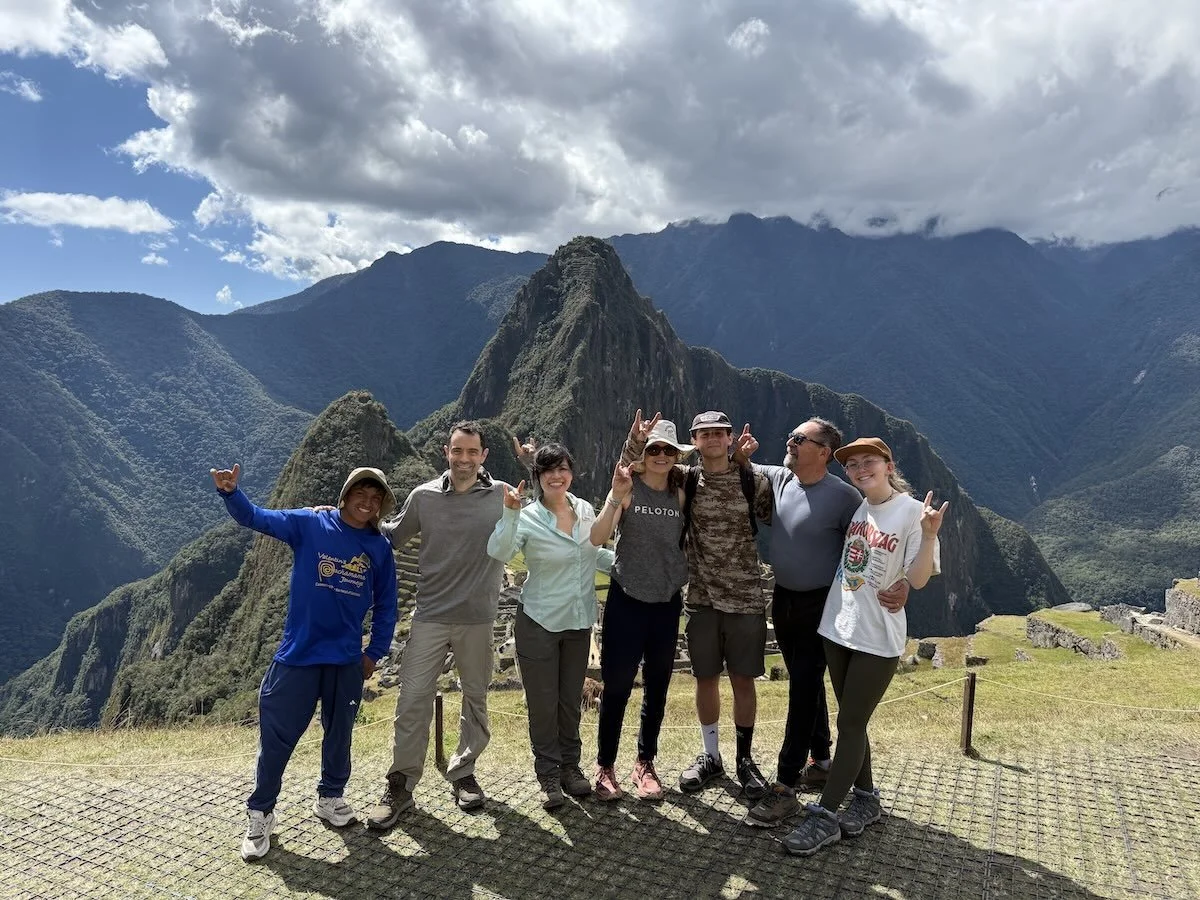
Machu Picchu, part of our Cusco, Sacred Valley and Rainbow Mountain tour
Cusco, Sacred Valley, Machu Picchu & Rainbow Mountain Tour
Cusco Complete Tour - 9 Days
Cusco Complete is just that — a complete tour package to the very best that Cusco and the area offer visitors.
We begin by gazing at the heavens before visiting one of Peru’s real stars, the Sacred Valley. You'll see traditional weavers and meet local schoolkids before starting the short Inca Trail to trek to Machu Picchu.
You'll see the Sun Gate, enjoy a full tour, and then head to see more amazing ruins and markets at Ollantaytambo and Pisac. Now acclimatized to high altitude, we take the backdoor route to the Rainbow Mountain, so we get it to ourselves.
The Cusco city tour is our final hurrah. You'll leave with no (Inka) stone left unturned. We include all the hotels, transport, and guides for this breathtaking tour of Cusco’s highlights.
Cusco, Sacred Valley, Machu Picchu & Rainbow Mountain Tour highlights:
Cusco city tour
Complete Sacred Valley trip, including Pisac and Ollantaytambo
Short 2-day Inca Trail to Machu Picchu, or take the train to Aguas Calientes
Rainbow Mountain visit
Glaciers at turquoise Humantay Lake
Visit amazing sites while acclimatizing gently
Cusco, Sacred Valley, Machu Picchu & Rainbow Mountain Tour Itinerary
Day 1: Arrive Cusco, transfer to hotel, planetarium visit
Our professional transfer team will meet you at Cusco airport and drive you to your hotel. Check in, relax, and get ready for your first tour to Cusco's Planetarium.
Don’t forget to read our FAQs, covering altitude, money, and more.
Cusco Planetarium
Having enjoyed a refreshing drink, we hop into our waiting vehicle and drive 15 minutes to the outskirts of Cusco. High up in the Andes, the air is clear, making it perfect for stargazing. Cusco’s Planetarium lies amid the archaeological site of Saqsayhuaman.
Specialist guides show you the night skies as the Incas saw them. Look through powerful telescopes, housed in a typical adobe house, at the beautiful night sky.
We visit the Interpretation Center first, then the Dome, both of which educate and prepare us to look at the constellations.
Through powerful telescopes, you see stars, planets, nebulae, and the constellations of the southern skies – a real treat. The light of the stars has traveled millions of years, just for you to see in these special moments.
Note: Planetarium tours are subject to weather conditions; constellations depend on the time of year of the visit.
Hotel: Tierra Viva or similar
Meals included: Dinner
Day 2: Salt Mines, Moray, Local School Visit, Pachamanca Lunch & Chinchero
We will pick you up from your hotel at 8:30 am. Our private vehicle takes us through beautiful scenery en route to our first stop: Maras.
Maras Salt Mines
Maras’ site is a collection of salt mines that have been used since pre-Inca times.
Workers channel an underground stream into various salt ponds. There are around 5,000 separate salt ponds, though not all are in use at once. The local community has to work hard and cooperatively to maintain the balance between salt and sweet water, to control evaporation, and to keep the pond walls in good order.
The intense Andean sun evaporates the water, leaving the highly prized salt. Some salt is white, some red and some brown, and you can find Maras salt for sale in the area.
Social Project
We then travel to a nearby village called Pillaray. We have sponsored a local school and are supporting them with our social projects. You can read more by clicking this link.
You can see the school and the village. At the school, there is a chance to talk and interact with the kids. Donations to the school are welcome; don't hesitate to contact us beforehand to discuss which materials are most helpful.
Pachamanca lunch
We walk to the home of a local family who prepare a picnic lunch for us—we will have a chance to make a Pachamanca.
Pachamanca comes from the Quechua words “Pacha,” meaning earth, and “Manka,” meaning pot. There are regional variations in how it is cooked and, occasionally, in the ingredients.
Preparation begins with the heating of stones over a fire. Meat and vegetables are then placed on top. An oven—called a huatia—is made by putting earth and grass on top of the food. Everything is usually cooked for 2-3 hours. We arrive just in time to dine and see the Pachamanca being prepared.
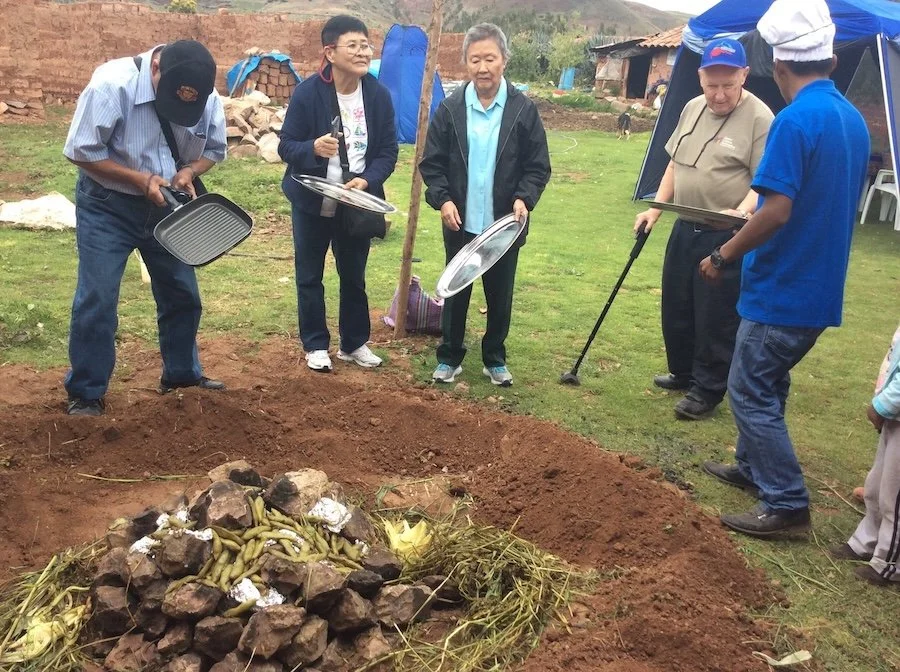
Making Pachamanca in Peru’s Sacred Valley
Moray ruins
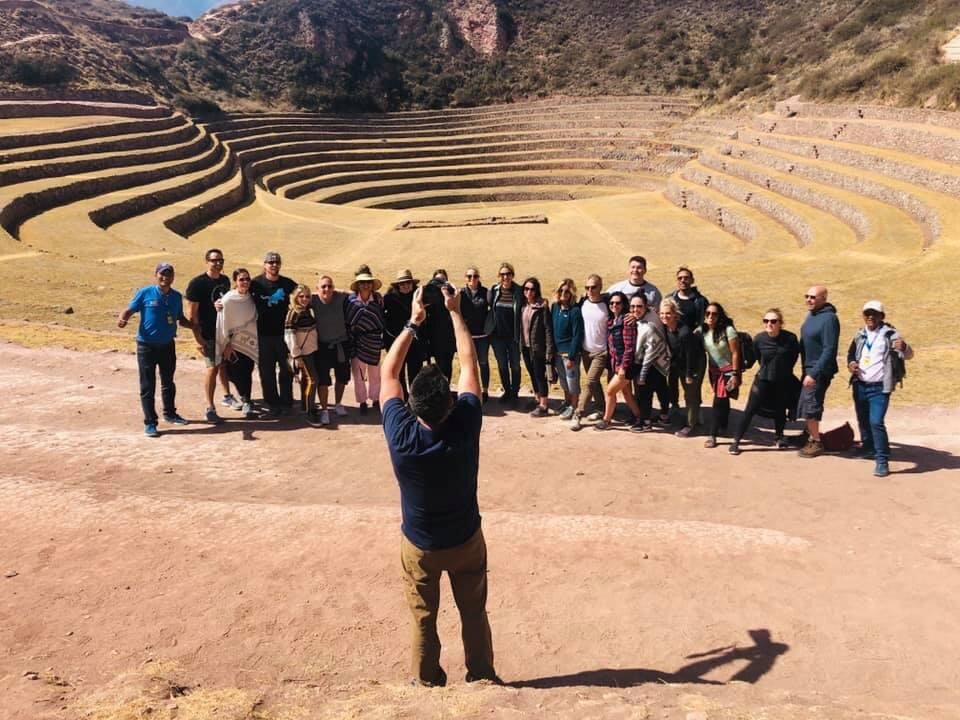
Bellies full, next on our itinerary is a visit to Moray (3,500m/11,500ft). Moray is an unusual and spectacular set of ruins: concentric circles thought to have formed an Inca agricultural laboratory. Some of the terraced circular depressions are 30m/98ft deep, creating a wide variety of temperatures within them.
We walk further into this archaeological site to some ruins that may have served as one of the main Inca amphitheaters. The Incas may have performed rituals and ceremonies here. Having thoroughly explored Moray, we head to Chinchero.
Centro de Textiles Tradicionales del Cusco
In Chinchero, we visit the women's weaving cooperative and watch a local weaver's demonstration. They use traditional Inca techniques for dyeing fabric and for weaving traditional patterns. The local community has used its internationally-renowned weaving skills to regenerate the village.
There is time to browse in the shop, where the items you've seen being made are sold. This is a great place to get souvenirs, from Inca-style purses, colorful tablecloths, wall hangings, and many more exquisitely patterned artisanal goods.
We drop you off at your Sacred Valley or Cusco hotel.
Hotel: Pakaritampu or similar
Meals included: Breakfast, lunch.

Maras Salt Mines, Peru
Day 3: 2-day Inca Trail trek to Machu Picchu
The 2-day Inca Trail begins at KM104, accessible by the 06:00 train to KM104, which we catch. You can also choose our four or 5-day Inca Trail trek, or travel by train to Aguas Calientes.
Our team will pick you up from your hotel and transfer you to the station. The train trip from Ollantaytambo to KM104 is spectacular, with phenomenal views of snow-capped mountains and the river we follow, the Urubamba. We pass farmers' fields and small villages as we descend the Sacred Valley. The flora slowly transforms from verdant pastures to lush jungle, overflowing with orchids and ferns.
We disembark after a beautiful two-hour journey and notice the warmer air temperature at these lower climes. You can feel the warm breath of Peru’s Amazon rainforest on your skin. This fertile zone produces a vast array of plants, such as yucca and sweet potato.
Our team awaits you; you need only enjoy a delicious breakfast before we start our hike. First, we must pass through the Inca Trail checkpoint, where passports and permits are verified before we start our trek. We handle all necessary paperwork at the time of booking.
Chachabamba ruins
We encounter the Inca ruins of Chachabamba almost immediately upon crossing the Urubamba River. The Chachabamba archaeological site, discovered in 1940, is believed to have had religious significance and was one of the gatehouses protecting Machu Picchu.
The ruins, situated at 2,150m / 7,054ft, feature ceremonial water baths, a natural rock altar, and a small plaza.
Hiking to Wiñay Wayna
The short Inca Trail hike begins now, as we set off for Wiñay Wayna (2,650m / 8,695ft), which means 'Forever Young.' It's an uphill climb with some flat parts, and our efforts are rewarded sumptuously on the 3-4 hour route.
Beautiful orchids, waterfalls, and lovely views of the Sacred Valley abound as we rise up the mountainside. We’ll also be able to see Machu Picchu mountain, but not the main ruins.
Wiñay Wayna
Wiñay Wayna, Forever Young in Quechua, is one of Peru’s most picturesque Inca archaeological sites, built into a hillside above the Urubamba River.
Agricultural terraces abound, but it is its Temple of the Rainbow, fountains, and stonework that set it apart. Sometimes mist clings to these ruins in the cloud forest, adding to their mystical charm. We hope to have Wiñay Wayna to ourselves as we enjoy lunch with unmatched views.

Just some of the ruins at Winya Wayna, Inca Trail, Peru
Hiking to the Sun Gate, Inti Punku
Bellies full, a gentle 3-mile (4.7km) trail leads us towards Machu Picchu.
Your first view of Machu Picchu is the most special, which is why we head to the famous Sun Gate, or Inti Punku (2,745m / 9,005ft). As we approach the gate, there is no suggestion of the view that awaits.
Cross through the Inti Punku, and on the other side, the archaeological wonder that is Machu Picchu spreads out beneath your gaze. What was once a fortress to monitor those entering Machu Picchu now offers the finest view of the ruins, some 300m/985ft below.
The Incas, of course, built more into the Sun Gate than just a watchpoint for people approaching from Cusco. On a ridge above Machu Picchu, its south-easterly location means the sun passes through the gate each summer solstice.
We avoid the early morning crowds by arriving in the afternoon, allowing you time to gaze on Machu Picchu and get the perfect picture. Satisfied, we descend towards the ruins but then fork right. We’ll then catch a bus at the Machu Picchu entrance down to Aguas Calientes and our hotel.
Dinner is included at a local organic restaurant, followed by a refreshing sleep before tomorrow's extensive tour.
Distance: 6.3 miles / 10 km
Elevation: 2,150m-2,650m-2,750m-2,040m in Aguas Calientes.
(7,054ft-8,695ft-9,005ft-6,692ft in Aguas Calientes).
Hiking time: 4-5 hours
Difficulty: Easy to Moderate
Hotel: Tierra Viva or similar
Meals included: Breakfast, lunch, and dinner.
Day 4: Machu Picchu to Ollantaytambo
Today, we explore the Lost City of the Incas — Machu Picchu.
It’s an early start because we want to enjoy the sunrise at Machu Picchu. We wake up at 05:30 and have breakfast at 06:00. We’ll board a bus for the 20-minute bus ride to the Machu Picchu ruins entrance, passports in hand for the checkpoint.
Your guide will take you on a two-and-a-half-hour tour around one of the world's most important temples. Have your camera ready.
Machu Picchu’s highlights include:
Intihuatana (Sun Clock): Beautiful sundial carved into the rock.
The Temple of the Sun: An enormous rock and the most sacred of all Machu Picchu’s temples.
Temple of the Condor: A natural rock formation sculpted into a magnificent flying condor image.
Temple of the Three Windows: A temple in Machu Picchu’s Sacred Plaza.
Huayna Picchu
You need to buy a permit (numbers limited) to climb Huayna Picchu, and it does sell out a long way in advance. Please ask us for more information.
It is well worth the entry fee. It’s an energetic 1-2-hour walk to the top, with steep staircases and steel cables at points. In wet weather, it can be slippery.
Once you reach the top, you have a new and wonderful perspective of Machu Picchu. Huayna Picchu also offers access to the Temple of the Moon, one of the three main temples at Machu Picchu.
The peak of Huayna Picchu sits at 2,693 m/8,835 ft, about 260m/850ft higher than Machu Picchu.
Huayna Picchu is not recommended for people with vertigo or a fear of heights. There are some steep stairs and vertiginous areas.
Machu Picchu Mountain
Like Huayna Picchu, you need a pre-bought permit for Machu Picchu Mountain. It doesn’t sell out as fast, but it is still recommended to buy the ticket as soon as possible.
The Machu Picchu Mountain trek is considered a moderate-to-challenging hike. You follow an original stone Inca Trail up to its peak, at 3,082m/10,111ft, which offers breathtaking views of the ruins and the valleys, and is 652m/2,139ft above Machu Picchu.
We recommend around 90 minutes to climb up and an hour to descend. During the wet season, the trail can become more slippery. Again, this is not suitable for people with a fear of heights - in places, the track is very steep and often follows the mountain edge.
We return to Aguas Calientes by bus and, if you have time, you may visit the town’s hot springs. It’s well worth paying the entry fee for an hour or two to soak in the warm waters. Then we head to our hotel in Ollantaytambo.
Hotel: Pakaritampu or similar
Meals included: Breakfast

Views to Huayna Picchu, at Machu Picchu ruins, Peru
Day 5: Sacred Valley: Inca Ruins, Local Market, Farm Tour & Chicha
Our driver will pick you up at 8.30 am from your hotel (Cusco or the Sacred Valley). There is a 45-minute drive through beautiful mountains and then down to the Sacred Valley.
Our first stop is Ollantaytambo, one of the best-preserved Inca towns in all of Peru. Many of the original 15th-century buildings are still standing. Ollantaytambo was an important town – it was home to the Inca emperor Pachacutec – and was the base for military victories against the Spanish.
Today, we explore the beautiful terracing, fountains, aqueducts, and ruins that surround the town. A highlight is Temple Hill with its Sun Temple and the impressive Wall of the Six Monoliths. The Pinkuylluna Inca storehouses are also spectacular.
Visit a Farm in Sacred Valley
We hop into the car and drive 20 minutes to the nearby town of Yanahuara, where we visit a local farm. This stop gives you the chance to see how local farmers cultivate the land.
You can help cut the alfalfa used to feed guinea pigs. Guinea pigs are a common sight in Peruvian kitchens and gardens. They are often cooked for special occasions throughout the Andes.
And now for chicha! The Inca maize beer. Your guide will explain the importance of this beer to the Inca Empire and explain the process of making it. You can help to start a batch of this brew, too.
We then drive 20 minutes to the town of Yanahuara, where we visit a farm in the Sacred Valley. We will tour the farmlands and cut alfalfa to feed the guinea pigs. You can participate in starting a batch of the chicha, the fermented corn beer of the Incas.

Organic farm visit, with alpacas, in Peru’s Sacred Valley
What is Chicha?
Chicha is a fermented alcoholic drink found throughout the Andes. It is usually made from maize, but regional varieties may be made from quinoa, yucca, or even potato.
The Incas used chicha in ceremonies and rituals, and it is still drunk on special occasions today. You buy it from Chicherias. These tavern-type places usually offer home-brewed chichi and are often identified by a small red flag outside.
How to make chicha
Chicha is made in pretty much the same way as malted beer. The maize is germinated and the malt sugar extracted. This ‘wort’ is then boiled and fermented for a few days, often in enormous clay vats, stirred occasionally.
Every chicheria has a different process. Some add sugar to aid fermentation; others get people to chew the corn and spit it into the water. Some makers chew the maize into small balls, which are then dried and used to ferment the chicha.
When ready to serve, the chicha is sieved to remove any corn from the liquid.
Most chichas are yellow, and the alcoholic content, while not usually strong, can undoubtedly be felt.
For non-drinkers, there is purple Chicha Morada, a non-fermented drink made from purple maize. It's common to be served with meals in local restaurants.
Chicha making will be followed by a private gourmet picnic lunch prepared by our chef. It will feature local organic produce, including some of the farm's crops. Enjoy a leisurely lunch outside, taking in splendid views over the Sacred Valley.
Urubamba market
After lunch, we go to the local market in Urubamba. Here, local families sell fruits, vegetables, flowers, and natural medicinal plants. Your guide shows you the market. You can taste Peruvian fruits and foods such as passion fruit, lucuma, and chirimoya.
Pisac market and ruins
Next up is Pisac – and it’s not just the market to see – there are majestic ruins at Pisac. We see terraced Inca ruins high on a mountain. From here, we climb to the top of the ruins and take in amazing views of the Sacred Valley. Your guide can explain the religious, astronomical, and military functions of these ruins at Pisac.
After visiting the Inca ruins, there will be a chance to hike on a little-known, seldom-used original Inca trail and through a tunnel built by the Incas. One of the largest Inca cemeteries is also located at Pisac ruins, and we can also tour this part of the site.
We finish the tour with a trip to the Pisac handicraft market. Browse ceramics, jewelry, and weaving – great souvenirs. The tour ends with us dropping you off at your hotel in Cusco.
Hotel: Tierra Viva or similar
Meals included: Breakfast, lunch.
Day 6: Rainbow Mountain: Cusco - Qesuno - Anata
We take a more relaxed, different route, past impressive landscapes, glaciers, and local farmers. Arrive at Rainbow Mountain early on the second day, before the crowds.
More about Rainbow Mountain
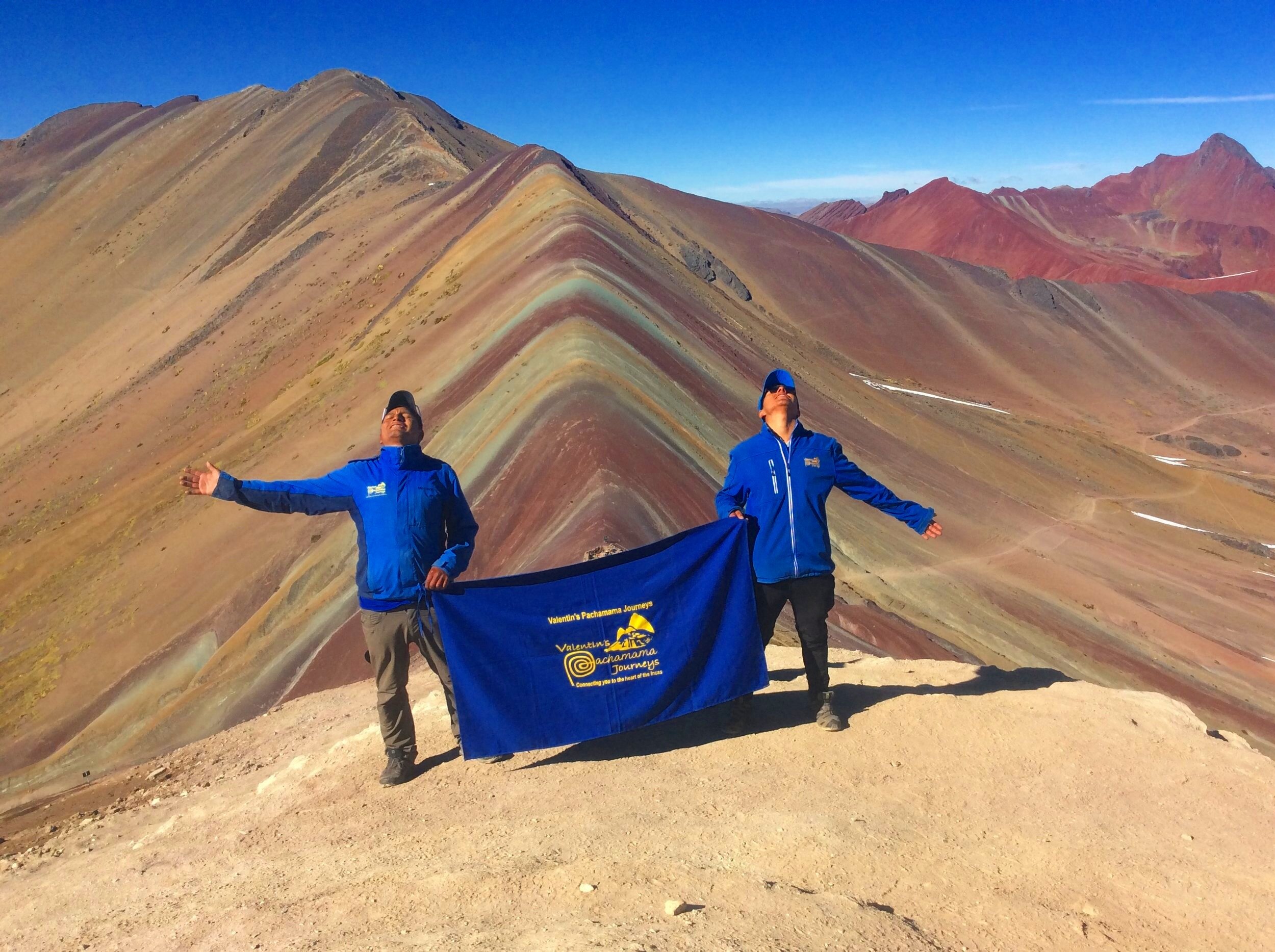
Rainbow Mountain is around a 3-hour drive southeast of Cusco. The fantastic 360-degree view over its multi-colored flanks is at an altitude of about 5,200m/17,060ft – you will now be well acclimatized for this part of the tour.
The Rainbow Mountain was initially known as Vinicunca, which in Quechua translates to ‘colored mountain.' There are 14 colors in total, including turquoise, gold, and violet. The colors are created by mineral sediments that change color when interacting with the sun, ice, and wind. Red coloring often indicates the presence of iron oxide, and yellow indicates iron sulfide.
Leaving Cusco
On the first morning, we pick you up at your hotel at 5:00 am and drive 3 hours through beautiful scenery south of Cusco to the trailhead. On our way, we stop in a local village to visit a local market. Here, we can see locals selling fruits and vegetables, along with their famous, massive loaves of bread.
Once we get to the trailhead, and before starting the hike, we enjoy a hot breakfast. We carry daypacks only; we leave the rest of our gear with a local horseman to look after.
The hike starts in a beautiful valley where we see local families farming and herding llamas and alpacas, just as the Incas did many centuries ago.
We continue ascending slowly and steadily to our first pass, the Condor Pass, at an elevation of 4,875m/16,000ft. We are rewarded with amazing views of the glacier-covered Ausangate mountain. Your guide will explain how and why the Incas worshipped this mountain. Be sure to get some photos from here, especially the five crystal clear lakes below.
We then descend from the pass and hike for another 2-3 hours to reach Ananta, our campsite for the night. The horseman will be here with your kit, and our chef will be waiting with a delicious lunch.
After lunch, we can have a siesta, walk around and take in the incredible views. We have dinner at 7 pm and then take time to look at the stars and see the Southern Cross, Venus, Jupiter, and the Milky Way.
Distance: 14km / 8.7 miles
Elevation: 4,200m-4,875m / 13,779-16,000ft
Hiking Time: 5-6 hours
Meals included: Breakfast, lunch, and dinner.
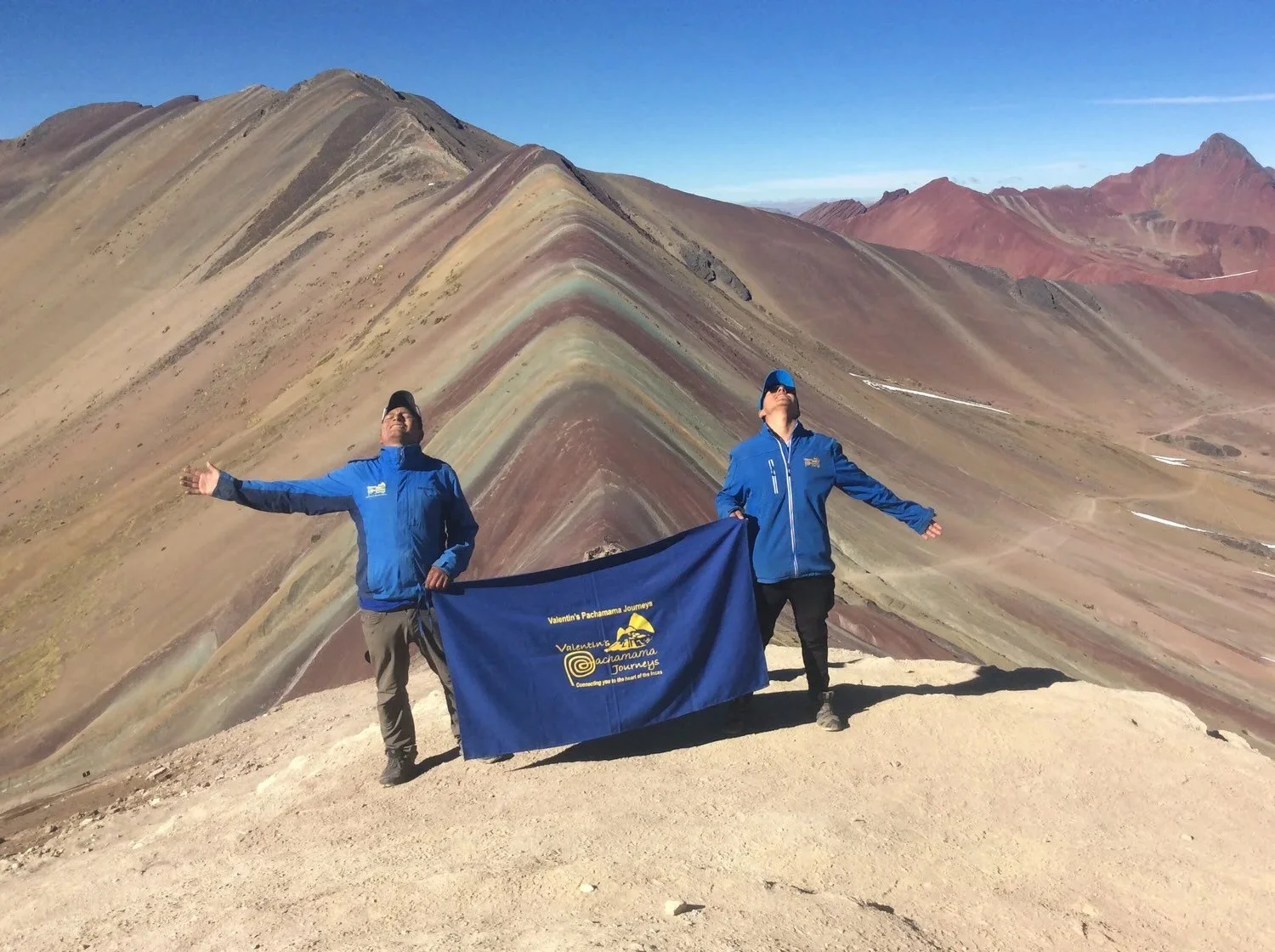
Rainbow Mountain, Peru
Day 7: Ananta - Rainbow Mountain - Homestay
We wake you up at 05.00 am with a cup of coca tea delivered to your tent. After a delicious hot breakfast, we hike to our second pass.
After about one hour, we reach the second pass to see our first glimpse of Rainbow Mountain. We then descend for 30 minutes. After a further ninety minutes, we will arrive at our final destination - Rainbow Mountain. You can take as much time as you want to take photos of this magical place.
The benefit of the 2-day Rainbow Mountain trek is that we arrive early, before most other trekkers.
The hike back to the trailhead will take about 3 hours, and we will enjoy lunch along the way.
Tonight we will stay in a family home in the area. They will share their lives with us, and we can see how they live in the countryside.
Distance: 18km / 11 miles
Elevation: 5,000m-5,200m-4,200m / 16,404ft-17,060ft-13,779f
Hiking Time: 6-7 hours
Hotel: Family home
Meals included: Breakfast, lunch, and dinner
Day 8: Qeswachaka Inca Bridge, Tipon, and Pikillaqta
We'll enjoy a hearty breakfast with our local family before waving goodbye and setting off on our next adventure.
We head to the Qeswachaka Inca Bridge. First, we descend a steep path to a viewpoint, then carefully cross the bridge together. Get ready for an adrenaline rush as you make your way across the swaying bridge.
Try not to look too closely at the river several meters below!
Safely across to the other side, a bridge attendant will greet us and give a brief demonstration of the bridge’s history and construction.
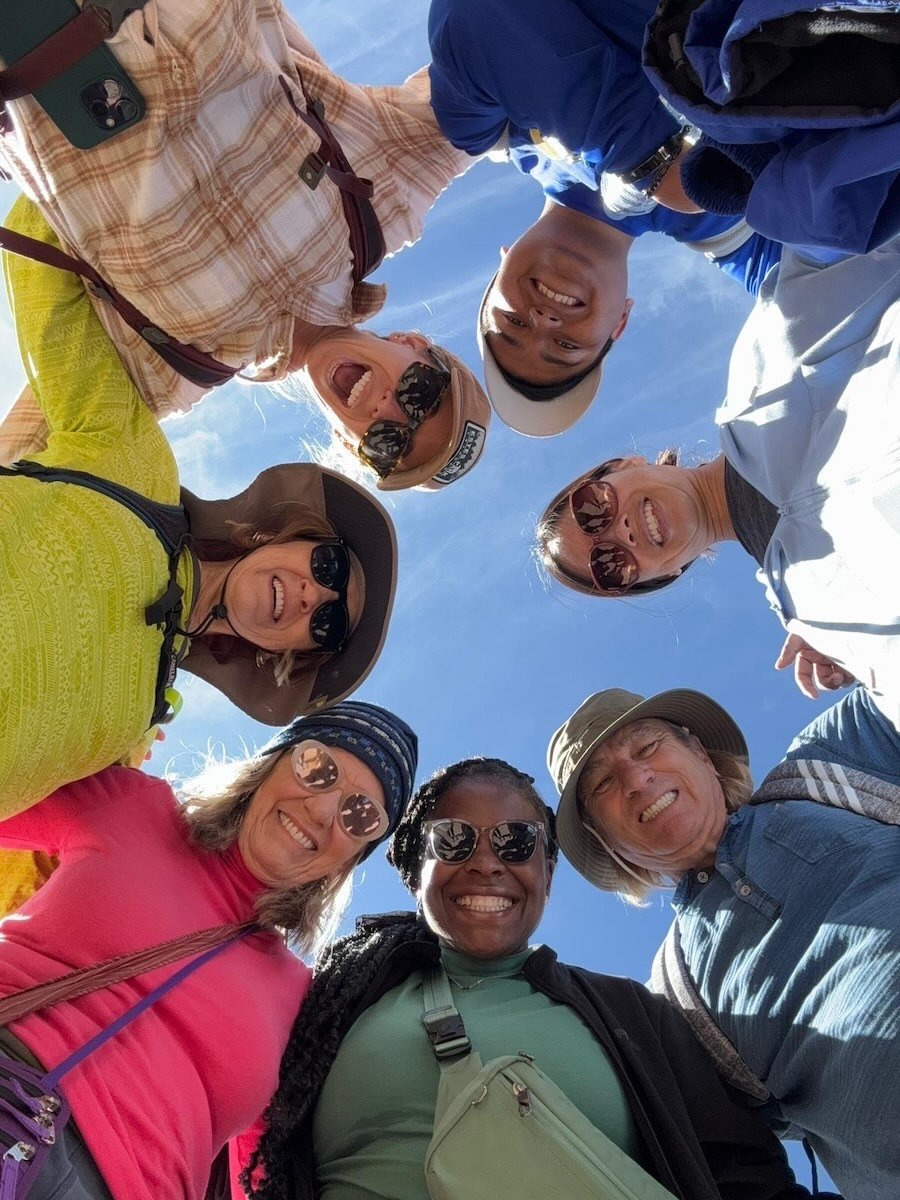
Have fun on our guided group tours in Cusco and the Sacred Valley, Peru
After visiting the bridge, we drive to see four lakes famed in this region: Pampamarca, Asnacqoccha, Acopia, and Pomacanchi. The lakes are set like jewels among the gold-green hills, shining in the afternoon sun as native flamingos and other birds fly and feed around their edges.
Next, we head to the Pre-Inca city of Pikillacta, located in the Lucre district, close to the Huacarpay wetlands. It is a pre-Inca city, the best-known and best-preserved city of the Waris. Pikillacta houses one of the most extensive irrigation works among a complex system of platforms.
We’re only 27 kilometers / 16 miles from Cusco, and we'll drive you back to your hotel.
Hotel: Tierra Viva or similar.
Meals included: Breakfast, lunch.
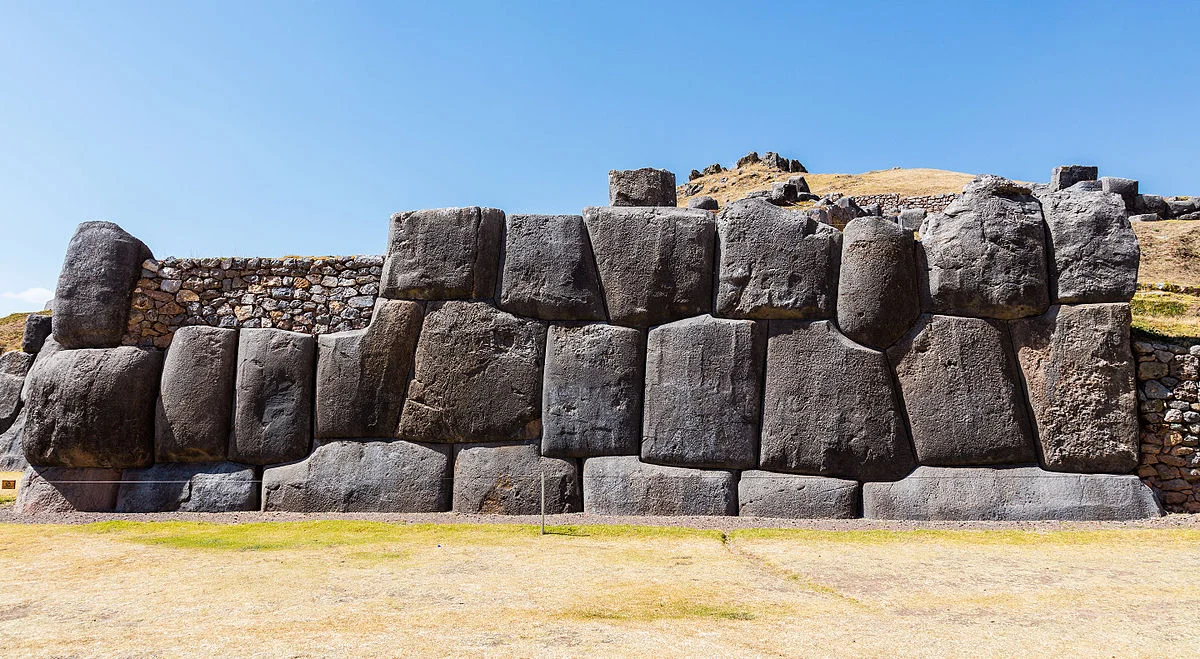
Sacsayhuaman ruins, near Cusco, Peru
Day 9: Cusco City tour, transfer to airport
We can adapt this city tour to your flight departure time — please ask for more information. The following is based on an afternoon flight out of Cusco.
Early morning, your guide picks you up for your Cusco tour from your hotel. The city is perfect for exploring on foot.
Our first stop is the bustling San Pedro market, where many Cusqueños start their day. We stop to have coffee or tea and tour the stands that sell everything from fruits and vegetables, meats and medicinal plants.
More about San Pedro Market
San Pedro Market is a complete sensory experience. You will notice street vendors in traditional dress hawking snacks, herbs, and other dry foods on the way in. There are many stalls inside, selling everything from local food to souvenirs to freshly squeezed juices. You could try one of a dizzying array of fruits (make sure yours is made with bottled water to avoid an upset stomach). Colors and smells flood your senses. Your guide will help you with any purchases you wish to make – haggling can be great fun – as well as trying local fruits and foods.
Plaza de Armas and Cusco Cathedral
After enjoying the market, we walk to Cusco’s central plaza, Plaza de Armas. This plaza is a great place to return to later and enjoy a coffee from one of the coffee shop balconies while people-watching.
On our city tour, we head to The Cathedral Basilica of the Assumption of the Virgin (Cusco Cathedral), built between 1560 and 1654 in the Gothic-Renaissance style. The Incas included some of their symbols – a carved jaguar head features on the main cathedral doors.
We head into the cathedral; you can see a massive silver altar and a painting of the Last Supper where they eat guinea pigs.
Coricancha Temple
Our next stop-off is Coricancha Temple, considered the most sacred Inca temple dedicated to Inti, the Inca Sun God. When the Spaniards arrived in Cusco, they demolished the Coricancha Temple but preserved its foundations, which they used to build the Santo Domingo Convent. Your guide will explain the temple's critical role in both Inca mythology and Spanish colonization.
Lunch is usually taken around noon-1pm, depending on how hungry you are feeling. Your guide will take you to a local restaurant where you can try many regional dishes, including cuy (guinea pig) if you wish.
Sacsayhuaman
After lunch, we hop into our waiting vehicle and drive 15 minutes to the UNESCO World Heritage Site of Sacsayhuaman.
Sacsayhuaman is located on a steep outcropping overlooking Cusco. This Inca site is composed of massive boulders held together without mortar. It was an important site for military and ceremonial purposes.
You will be given a private tour of the site, and we go to a vista where there are great views over the city of Cusco. We return by private transport to your hotel in Cusco (hotel not included tonight), or take you to the airport for your flight out.
Transfer to the airport, and your tour ends. Thanks for sharing your time with us in Peru!
Meals included: Breakfast.
Cusco, Sacred Valley, Machu Picchu & Rainbow Mountain Tour Prices
Minimum two people
9 days
Groups of 2: $2,032 per person
Groups of 4+: $1,914 per person
What’s included?
Hotels, English-speaking guides, private tours, accommodation, and trains as listed, Inca Trail permit and Machu Picchu entry fee, meals as listed, Bus tickets Machu Picchu to Aguas Calientes, Train tickets Aguas Calientes to Ollantaytambo (Expedition or Vistadome available for extra $55pp one way, $110pp return),
What’s not included?
Flights, tips, alcohol, soft drinks, souvenirs, meals not listed, anything else not listed under included, tourist ticket: 130 soles/$40 covers the entrance to Pisac, Ollantaytambo, Chinchero, Moray, several museums in Cusco and Sacsayhuaman or 70 soles: $23 covering only some of these sites, lunch, entrance to the cathedral ($12) and Coricancha ($5)
Suggested tours
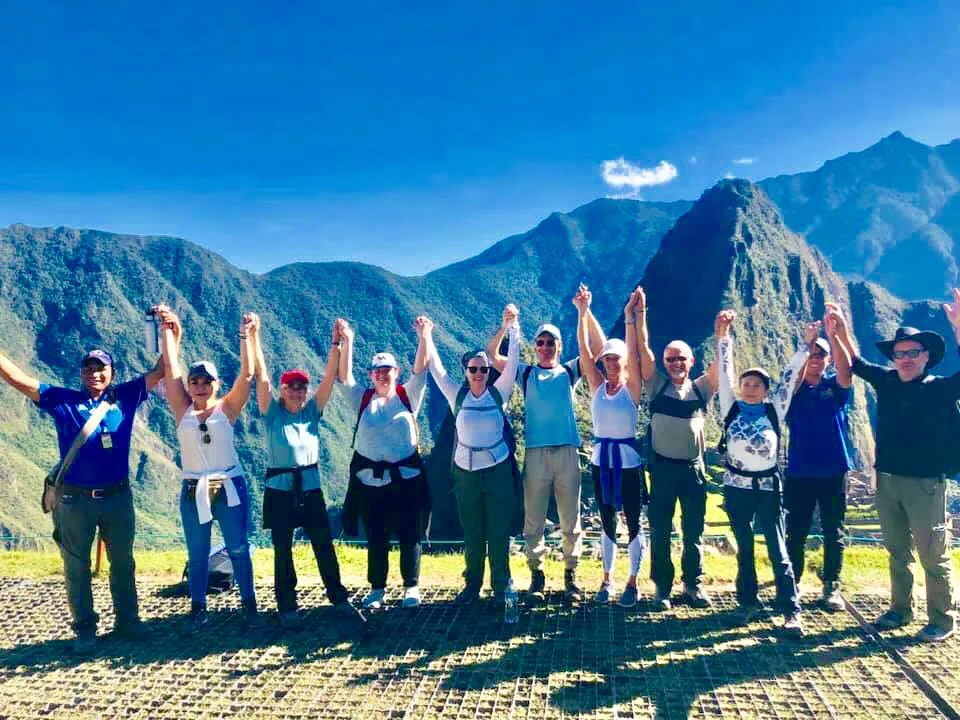
Machu Picchu
Sacred Valley

Make Chicha
Rainbow Mountain
Cusco Complete tour gallery

<- BACK